
Hi, I’m Reece! If you’re new here… Wow, I have no idea how you got here, but maybe leave a comment and tell me how! Also consider subscribing to help me grow the blog!

Anyways, I’m a “retired” YouTuber (we are a small group of people!), I didn’t ever plan to be a YouTuber (did anyone born before 2007?), and I think there’s a lot of wisdom I can dispatch on the topic.
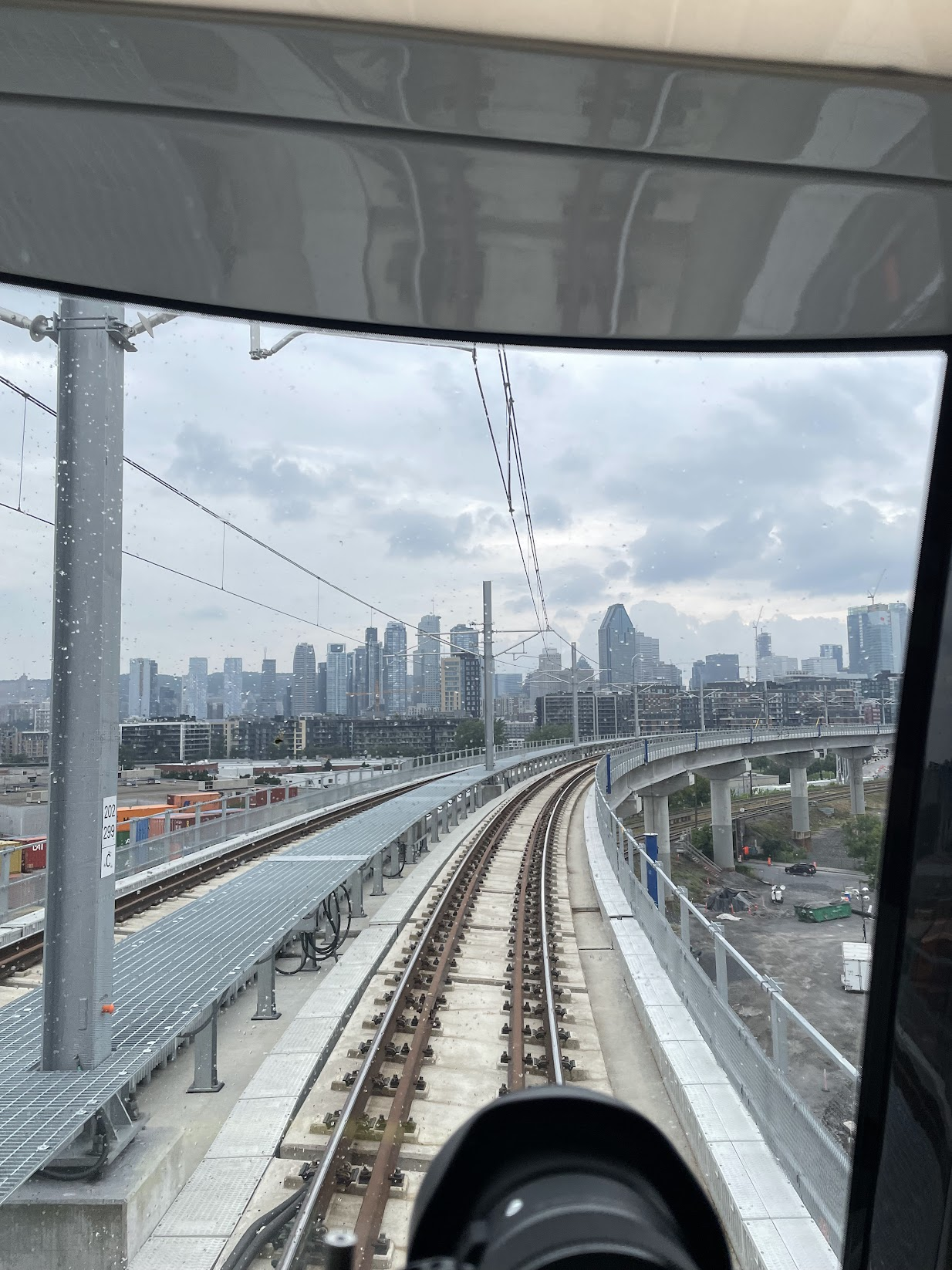
I started my YouTube channel in 2016 while studying at university with videos of passenger trains and subways — that was it, and eventually ended up creating content on everything public transit, with videos about cities around the world, and every rapid transit system I could wrap my brain around. In 2019-2020, I made YouTube my full time job as I graduated from school. I had studied Computer Science in university, and while I had a programming job lined up a bank, I correctly (I think) identified that YouTube would be an infinitely more interesting and enjoyable job and went all in.
With a young child, over 800 videos under my belt, and living in a city (Toronto) that has failed at every level to provide its citizens with the public transit system it deserves, I decided at the end of 2024 that it was time for curtain call, and I took on my new full-time job of being a dad (and relearning software development so I can go work in tech), and wrapped my channel.
That all being said, the truth is, I think my time doing YouTube taught me a lot, not least about what YouTube is like as a career, so I thought: why not compile some of those learnings into a blog post? So here goes:
1. YouTube starts as a Volunteer Position and Google always takes a big cut.
People seem really allured by the idea of making money on YouTube from the in-built ads, which you can do once you meet some fairly-low subscriber and viewership metrics. The thing is, hitting those numbers isn’t necessarily trivial, or fast, and until you do you will be working for free. What I think a lot of people don’t realize is that there’s a big period of time when you have > 1000 subscribers but < 50000, when you’ll probably be making money on paper, but it might be a few hundred dollars per month. You’ll be working for a few dollars, or maybe cents per hour. At the same time, no matter how big you get, Google takes a big chunk of your revenue: they are of course hosting a lot of video which isn’t free, but which has gotten much cheaper, and now they’re almost certainly also using your stuff to train AI…
2. People are overly prescriptive in approach
One of the first things you find out if you’re running a YouTube channel and you dare to search anywhere on the web for information about growing it, is that there is an entire YouTube sub-genre and industry based around stroking the egos of people who want a big YouTube channel. There are a lot of people who go into way too much detail trying to engineer videos that get 1% more likes or whatever. I don’t deny that this silly stuff works, but you’re almost certainly better off just making more and better videos instead of trying to figure out what keywords to use and whatnot. People are just really prescriptive, and once you talk to other YouTubers you’ll hear a lot of strong opinions about the right way to do things, which I’m not confident actually exists.
3. Freelance jobs are hard
YouTube as a job is essentially freelancing. Sure, you don’t have to land jobs, but you do need to make good videos. Don’t make good videos and you don’t get paid! If you’ve never worked freelance before, it’s… a trial by fire. You also don’t get your taxes pre-deducted from your paycheque, which takes some off the top as well. Probably biggest of all: there are no benefits, which makes doing things like taking a break a real challenge.
4. The income variability is killer
And even when you are making a solid income on YouTube, your income is always quite variable. YouTube revenue is often heavily dependent on getting external sponsors (for what it’s worth, it never was for me, but it is for a lot of people), which basically comes down to winning a job. Now, regular old AdSense is consistent (assuming your videos are “advertiser-safe”) in the sense that you always get some, but that revenue you get is less consistent than you might think because it’s highly dependent on the broader ad market, which changes by season, by how much exposure your videos actually get, and, well, how many new folks are working for almost free for YouTube. What this all led to for me was feeling like I needed to work extra so I could meet a certain monthly income minimum — rent unfortunately doesn’t come at a discount randomly some months.
5. The work is everywhere
This might seem a bit relatable to the many more hybrid and remote workers out there these days, but you can and will work in all kinds of places and at all times. I found myself working every day of the week, and most hours of the day. Life and work blend into one. That’s encouraged by the general sense of precarity and the variable income. Depending on the type of videos you make, you also might feel the need to make content when you’re just going about your daily life. Then of course there’s the fact that a lot of YouTube just doesn’t work on regular work hours: comments and emails come in at any hour, and video releases can happen at any hour of the day. It’s not healthy.
6. YouTubers talk
Something that is nice is that YouTubers are a diverse and generally pretty pleasant group. Assuming you’ve got a modestly large channel, it’s pretty easy to get in touch with anyone, and I will say there’s a lot of bonding to do over YouTube creator frustrations. Personally, I’ve been in touch with essentially every major YouTube creator in the space I was making videos, and that was very cool.
7. Press-Release Tube
Something you quickly realize if you’re a wonk is how many YouTube channels on technical subjects are just recorded and reorganized press releases, made with varying production value. The amount of “megaproject” videos I have seen on transit projects that don’t even seem to understand them as more than a new subway or railway and have no idea what the critiques are is remarkable. It leads to this weird dynamic where a lot of content on some subjects says more or less the same thing (and nothing more), and then you hear from viewers that they enjoy this and you weep over the fact that people are spending their time listening to press releases turned into videos. The problem here of course being that press releases often don’t provide a lot of insight and sometimes verge on propaganda. This stuff is also super easy for me to identify because anyone who’s into transit is going to compare Crossrail to the Paris RER or German S-Bahns, and yet so many videos covering it which pretend to come from a technical angle do not!
8. College-Class Tube
There’s also a whole class of YouTube channels that feel like they are regurgitating first year University classes on various topics. I think like with Press-Release tube this has a pretty large addressable market because lots of people haven’t gone to university or haven’t taken said classes, but there’s a lot of pretty out-of-touch professors who teach overly simplistic or downright wrong things in first year University classes! I remember hearing for example geography professors talking about BRT like it was the invention of electricity, or saying Vancouver doesn’t have “subways” (it does) because of earthquakes (don’t tell them about Tokyo!).
I think with both of these X Tubes, you just find when covering technical topics on YouTube that a surprising number of people are willing to push out not only totally uninteresting and unoriginal analysis, but that a lot of people who talk like they are experts actually have very shallow depth on a variety of topics. It reminds me of the wonderous Gell-Mann amnesia effect.
9. Comments are bad
That YouTube comments are about as enjoyable as running a cheese grater against your face is well-known (some comments are great of course, but on balance I am not sure they are a positive). But, what I think is underappreciated is just how terrible the YouTube comments system is. There is not a good way to “@” people, there are not easily usable links to comments, and sorting through comments is hard. I actually think YouTube could and probably should have a reply system as sophisticated as Reddit’s, but for over a decade the comments system has basically remained horrible (but hey, now we have cool YouTube membership flags because YouTube is happy to make easy money). What’s funny about this is that if the comments system didn’t suck, I think there would be so much more engagement on the platform. There have been so many comments I almost missed that were great, and so many I left that the creator probably never saw. I think this is all a good reminder that just because you are one of the largest social platforms (and companies) in the world does not mean your product is actually all that great, or on a positive trajectory.
10. Analytics are bad
Perhaps even more surprising than a comment system on a social platform being borderline useless, YouTube’s analytics are also really not great. Funnily enough, they are so bad that many YouTubers (I am not in this group) use poorly-designed browser extensions to try to get a lot of information that YouTube should have just been providing creators for the past decade. There are a lot of things that make the analytics system poor (not a lot of insights provided, a lot of weird deprecated features, data which often seems unreliable, a bad user interface, and no “overlay” on traditional YouTube), but worst of all is that it’s clear that the few analytics features YouTube has added such as the (widely-disliked) “How does this video compare against your last 10?” field, are clearly designed to try to keep you anxious and working late for YouTube’s 30%. What’s perfectly fitting is that it’s not even a useful insight because if you keep putting out poorly-performing videos, the baseline you are comparing against will also fall.
11. Some genres are easier, all are different
There are a lot of genres of YouTube, which is probably its biggest strength. What’s interesting is that all genres are not made equally. As someone who was in a pretty niche part of the platform (public transport), there were pluses and minuses. On one hand, being in a small niche gives you less competition, but that also means a much smaller number of potential viewers (you kind of have to grow your own niche). If you start a tech channel by comparison you have a massive number of viewers to tap into, and a bunch of them are probably looking for something new. I think being in a larger niche where you get to focus on differentiating is easier compared to trying to make people care about a topic which they do not already care about.
12. A lot of YouTubers are unethical
Something you notice pretty quickly once you’re familiar with the brands that often sponsor people, and the things they try to do, you realize that a lot of YouTubers operate in an unethical way. This runs from not clearly stating that something is sponsored, to showing products in videos that you pretty clearly got for free from the company and are not stating as such. This really runs rampant in tech YouTube (I am of course interested in the subject for reasons I talk about here), particularly when it does it’s crossover into lifestyle vlogging where people basically go and humblebrag about their fancy homes and offices, filled with things they were gifted by brands.
13. People don’t respect you
I already mentioned earlier in this post how YouTube as a job is often a 24-hours a day, 7-days a week affair. What’s frustrating is that despite this, a lot of viewers also have unfair expectations from YouTubers and their time. I can’t count the number of rude comments and interactions I’ve had where someone demands a video on X, Y, or Z, and worse still a lot of people will reach out and ask for free work (from someone already grinding for what is often a pretty low wage) — for example, journalists who want you to brain dump onto them and then provide no credit, or students asking for “help” doing a big part of an assignment for them, or people running businesses who want to pay you — a presumably well-known content creator — with “exposure”. And then there is the way that YouTubers get treated by virtue of being a YouTuber, it’s surprising how often people have given me trouble when I tell them that’s my job, or when people working in the industry I’m covering act like somehow by making things online I must be unqualified to speak to them. This is silly because I think the average YouTuber covering a topic is usually at least as qualified as the average newspaper journalist, but YouTube just remains “novel”.
14. I think it’s some of the highest value career and learning experience you can have
Doing YouTube as a job is essentially running a small business: it’s really hard (on average), but you learn a ton. For one, you are more or less single handedly responsible for everything — admin, filming, editing, writing, communication, research, finances, market research, negotiation, strategy, and planning. When running a YouTube channel, there are almost infinitely many ways you can spend your time, and it forces you to think very carefully about how you can create value for your viewers, what matters, and what is table dressing. It also teaches you a lot about the value (or lack of value) in so much of the make-work and process heavy things you spend your time doing in a traditional corporate job. Not having a manager also means you need to be self-motivated: if you don’t make stuff, you don’t make a paycheque.
So, those are some of my big takeaways after almost a decade of doing YouTube, it was a wild ride and I learned so much. Sometimes I’m not sure whether I learned more about and from the topic I was covering as opposed to from the process of making things itself. I’ve long wanted to do a post like this, make sure you’re subscribed because if this one does well I will make a Part. 2!







Leave a Reply