
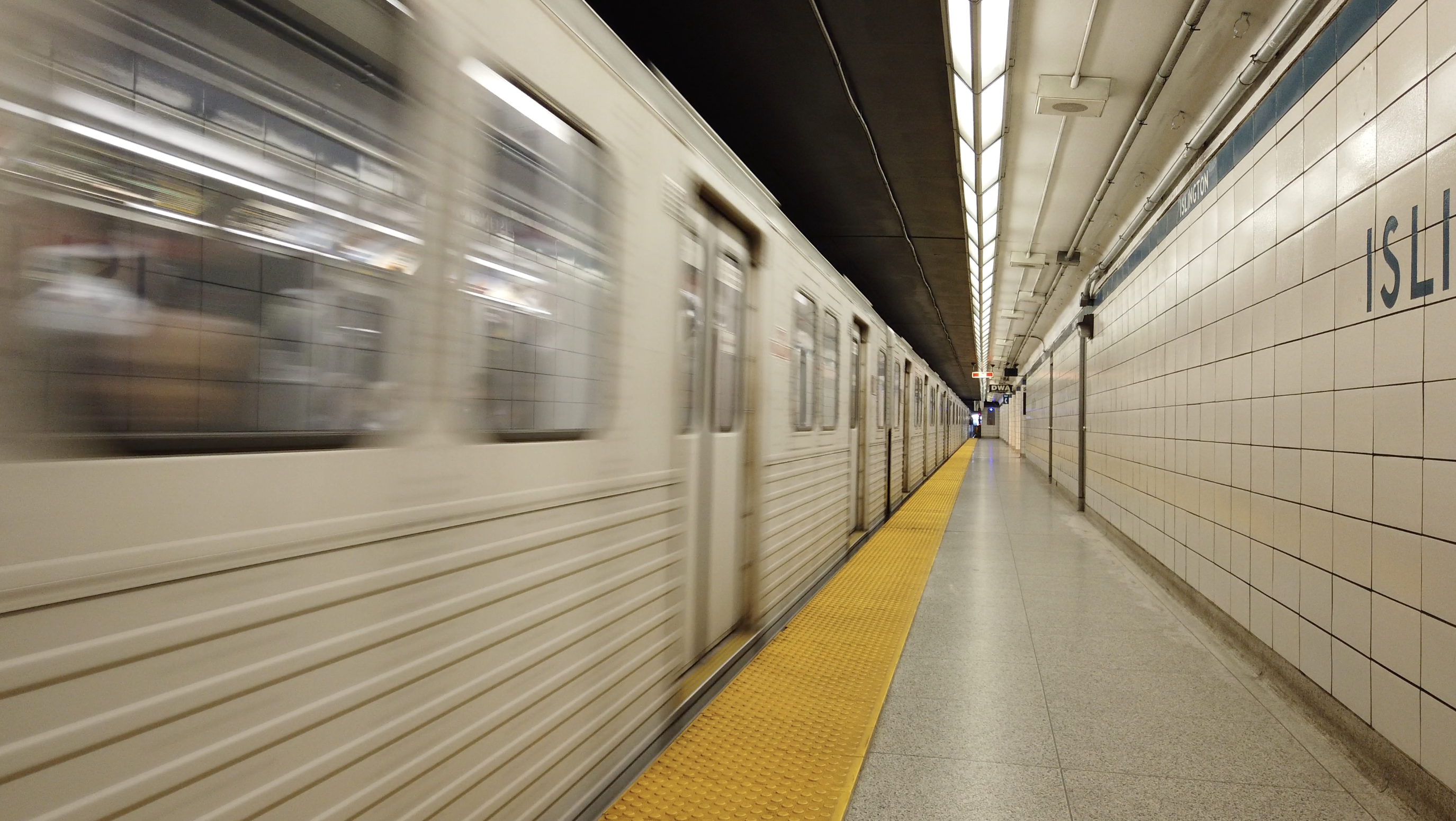
Far too often, cities and transit agencies take a “new-or-nothing” approach to infrastructure and vehicles, and that’s bad!
Recently while browsing Twitter, I came across a post from “JR Urbane Network” that really spoke to me:
As it turns out, Guangzhou has been retrofitting metro trains built in the mid-1990s with LCD wayfinding screens. By comparison, similarly old subway trains in Toronto — the T1 series — do not have any digital internal wayfinding. If you have poor hearing, are unfamiliar with Line 2 where they run, or there’s an issue with the train, you can simply be totally unaware of where you are.
Now, observant readers will mention that Toronto is planning on replacing the trains on Line 2, I even wrote an article about it here.
However, this is not a solution to our problem.
EDIT: As of June 26th the TTC has cancelled its plan to procure new trains – highlighting the need to refurbish the older cars!
The Line 2 trains are not currently all that old (at least for subway trains), and some might argue that they need not be replaced for 10-15 years. Of course though some might not like the idea of keeping a train with no digital wayfinding of any type for over a decade longer — and this is why we need to get serious about refurbishing old vehicles.

The reality is, old trains are common, and while they might look old after 20 or 25 years, their bodies can last for twice as long if they were manufactured well. London and New York have both operated trains for over 50 years, and while you might not want your city to go quite that long — 40 years is quite reasonable.
But, of course while the bodies might last 40 years, the interior finishings, layout, and design are unlikely to have as much longevity, and so a major refit makes sense. Throwing out a train (or turning it into an artificial reef) before its time has come is wasteful and bad for the planet — it also sets an unhealthy precedent that means riders today have to wait for the amenities that could be retrofitted into the trains they are riding today.
There are loads of good examples apart from the one above: This example shared on Twitter has a train used by South Western railway in the UK in it that most people would not know is the same model had it not been placed side-by-side with its earlier rendition.

As you might expect, stations face the same problems: They are let to fall into total visual disarray or worse before they might get improvements. And the same is true with infrastructure which can lead to catastrophe.
Ultimately, this attitude towards upgrading vehicles and facilities shows a lot about how some transit systems see passenger experience. If it’s simply a nice to have, then passengers can wait for new trains or a total station rebuild. But if it’s critical to access and the experience of using their services, then it should be done as soon as possible — and continuously.




Leave a Reply