
If you’re not subscribed to my new blog, please consider doing so — sharing also helps me grow my audience!
This is a brief warning that this post will talk about politics, which is not something I usually talk about. I don’t like talking about politics, and I don’t plan to make this a regular feature of my writing. This post is not really about partisan politics so much as the dynamics of our politics and how they relate to transit — particularly in North America.
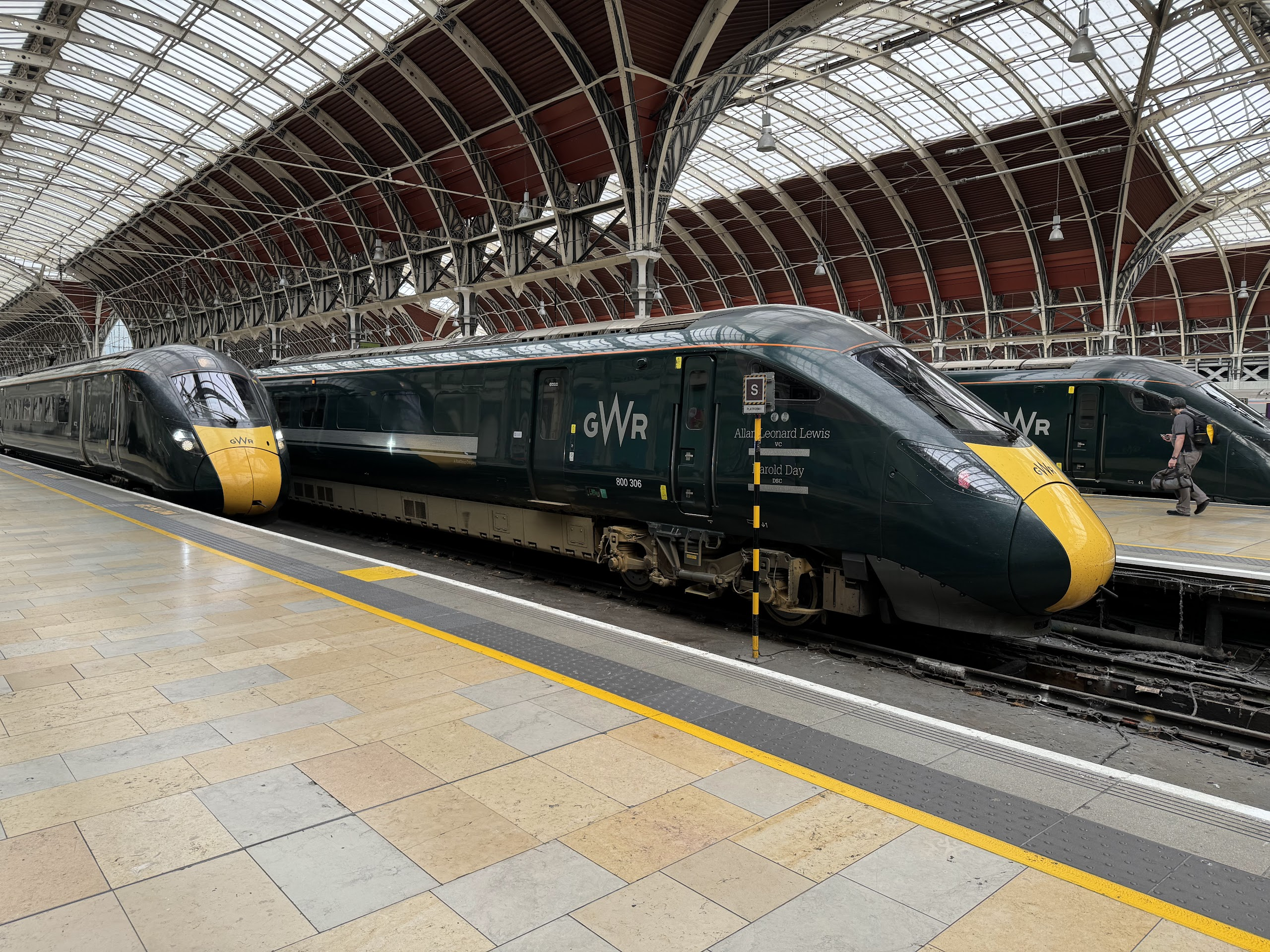
While most people do not think positive things when they think of HS2, one of my formative moments thinking about how more transit could be built was seeing a Conservative MP in the UK talk about how important HS2 was in the British Parliament. Where I grew up in the suburbs of Vancouver, Canada, transit was not something Conservatives would be supportive of in basically any circumstance.

At the time, and in much of the late 2000s and 2010s, I felt that little was being done on the transit file, relative to how important it was. And what kept coming back to me was how in BC Conservatives were just not as into big transit projects as they were in a place like the UK.
Ironically, in the late 2010s I ended up living in one of those places where the Conservatives were driving forward tons of huge transit projects — in this case, the Doug Ford (indeed the late Rob Ford’s brother) Conservatives, who have pushed more transit forward more quickly than almost any other government in North America, with projects including 3 subway extensions, a new subway line, a new light rail line & several extensions, regional rail expansion, and a litany of smaller projects. I am not sure that this would be within the Overton window if not for the fact that transit is seen as a good thing across the entire political spectrum.
But this is deeply unusual. In North America, transit is generally a “progressive” thing (this is the North American progressive with the policies that they bring with them), but I’m not sure that actually always leads to the best outcomes for transit — even if only because it means that only about half of us are rowing in the “more transit” direction.
What’s interesting is that in a lot of places, transit is not really a progressive thing. Sure, the trope of Conservatives loving the automobile is pretty universal, but taking a train somewhere isn’t always seen as this inherently progressive thing — sometimes it’s really just a good practical way to get around.
I actually think the idea of transit being good enough to attract riders who have other options is a pretty important thing (so called “Choice” riders) — it’s often seen as not-so-progressive (or outright bad) in North America (which is notably a place that doesn’t have many transit riders, so it’s worth considering whether ideas like this are part of the reason), but in most of the world its just logical that you’ll probably not take transit if transit isn’t very compelling! I think the fundamental issue at play here is that transit being good enough to attract riders who have a choice really doesn’t need to be detrimental to riders who depend on transit — in fact, I think it’s usually the case that this just means those who depend on transit and choose to take it alike are getting a great service; It’s a rising tide lifting all boats situation.
And there are a number of places where I think by running transit the “progressive North American” way — that is, in keeping with “progressive North American” positions on any number of issues we actually might end up with worse transit.
One of those issues is free fares, which I’ve talked about before — the way I read it is that the progressive position on redistribution politics really likes the idea of policies like making all services provided by the government free at point-of-use, but lots of real world case studies have found this doesn’t actually work all that well — and most places with notably great transit do not have universally free fares.
Another issue is the idea of private industry being involved in running and building public transit. In North America there is often a very strong aversion to this among transit supporters, but having private companies bid for contracts to run transit service is very common around the world in places that are good at public transit, often with the public operator competing with private businesses or coordinating them. Now, to be clear of course, progressives in say Europe also want lower fares and more public operations, but there seems to be a lot more pragmatism: If lowering transit fares means cutting service, then lowering fares is likely seen as the lower priority (as studies of rider preference generally suggests it should be)!

Looking at places where transit is successful (Europe stands out, but there are plenty of examples in Asia too), the policies that coordinate transit seem to be more “ideologically-balanced”, and to be perfectly clear this isn’t a suggestion for change, just an observation.
In places where huge numbers of people ride buses and trains every day, private companies often operate those services or own some of the vehicles. There usually are fares, and transit competes actively with other means of transport like the car. In this frame of reference, bike lanes to a station might be seen as a way of reducing the need to subsidize local transit service, not as a progressive “war on cars”.
I think this is still worth thinking about even if you don’t think the reduced creep of progressive priorities into transit operations has any influence in the difference in quality from place to place. When you are an advocate for something like public transport, you can’t just advocate to people who already agree with you — and I’d argue that’s often a waste of your time — but to get people on the other side to understand a policy that you think is obvious, putting it in terms of their vocabulary and priorities can be very helpful.
Stepping back, I think having a place where people across the political spectrum understand transit, and hopefully use it to an extent probably fuels the type of policies that we see in Europe and Asia (often some form of market involvement) — which appear to be very effective, but do not align with the progressive North American vision of transit — but it also probably helps generate support across the political spectrum. And of course this is not some sort of bold call to start privatizing public transit (in the actual sense, if the Europeans don’t think that having operators big to run routes is privatization I think we’re ok!), it’s simply one to consider how we need to approach some areas of policy with a big less of a partisan lens, and implement policies which actually generate the results we want.
So often in North America, the conversations I have with advocates who want free fares, and fully public operations, and a focus on “captive” riders are not themselves transit users! (That said, advocates often do not see the problem and the immense irony in this is very frustrating to me, and for the record — I get around on transit!) And this highlights the whole problem (do these people really not think transit is just mostly for people who can’t afford cars?).
In trying to create the perfect “imagined” transit system that is aimed primarily at the downtrodden in society (those who don’t have a car, which is “obviously the way to get around if you have a choice” —facetious of course, but reflective of how these positions often feel), we often create one that doesn’t actually get everyone onboard, and the truth is as long as transit is only well-used by small cohorts of society it will always be susceptible to cutbacks and deprioritization — it’s just how democracy works, if something isn’t helping most people, it slips down the priority list!
Another funny aside is that advocates often talk about the perception transit has of being “only for poor people”, but then make policy decisions that imply and plan for transit services that are overwhelmingly oriented towards low-income folks and the like. It’s probably a good idea to point out that a lot of policies that are talked about like they will help poor people (for example, universally-free fares) will very much do the opposite in practice. Low-income fares are quite widely available on transit systems, so universally-free fares just means people who can afford it aren’t paying — which only doesn’t have an impact when you have few choice riders. While I don’t like the idea of choice and captive riders anymore than most people, almost all of my lived experience suggests a large number of choice riders are often a buffer that protects captive riders; I’d much rather have been in a city like New York (many choice riders) during a dark season of transit than in say Los Angeles (few choice riders).
I think at the end of the day, all of this highlights my belief that transit systems and advocates should focus on maximizing system ridership. While this is not a perfect proxy for success, it helps avoid pitfalls like the “progressive” policies so often seen in North America that lead to the very low ridership of so many systems, and the general public’s regressive belief that transit is not for them.





Leave a Reply