

If you enjoy my blog and want to help support it, please subscribe (it’s free)! You’ll get weekly articles about transit and cities (as well as the odd off-topic post) directly to your inbox!
Since I’ve been in the online transit community (mostly in North America), one of the questions I never see asked enough is why North American cities — and American cities in particular — are not building new subway systems. I think this question is interesting, and doubly so when you consider the fact that few of the systems the US has built over the last 30 years have been all that successful in ridership terms internationally, or even comparing them to systems in Canada.
When you look at the numbers, it’s rather remarkable — almost no subway systems have been built in the last ~30 years in the US (Honolulu Skyline, San Juan Tren Urbano, LA Metro’s Subway Lines — that’s it!).

While the numbers also aren’t great, unsurprisingly the US has built a lot more light rail systems in that time — including in Norfolk, Seattle, Phoenix, Charlotte, Minneapolis, Houston, Salt Lake City, Dallas, Denver, and St. Louis.
Now, the transit literate are likely to point out that Europe like the US has built way more trams than metros — though frankly Europe has built a lot more in general. But, what happens far too infrequently is a look in the other direction to Asia. Cities in Asia have a lot in common with cities in North America: there tends to be less “historic” urbanism (or say streetcars) left thanks to mass urbanization, cities tend to sprawl, and there also tends to be a lot more extremes of development. A lot of the urban growth of many Asian cities is much more recent like in North America, and a lot of the transit systems have been built fairly recently.
What you’ll notice is that unlike in Europe, cities in Asia have overwhelmingly favoured metro — while yes many cities have built a tram line or two, I wouldn’t be surprised if the ratio of metro mileage to tram mileage is greater than 100 or even 500 to 1.
While I think it’s nice to highlight that a city like Chengdu in China’s Sichuan (like the sauce) province, which many Americans have never heard of was able to build the world’s 4th longest metro system from nothing in just about a decade (Chengdu Metro opened in 2010) it’s not surprising that massive cities in China (which given its population will be more common than in the US!) have necessitated big builds. But, if you look at Chinese cities in the 3 – 5 million person population range, similar in size to the Dallas, Denver, or Phoenix metros – you see that even they have been building.
Xiamen for example has a 3 line subway system with over 70 stations, with 2 more lines under construction — and it only opened in 2017! Meanwhile, Wuxi has a 4 line, 87 station system that opened to passengers in 2014.
Not only have these cities built respectable metros in a couple of years, while large US cities like Dallas and Phoenix have zero subway, but they’ve also (perhaps unsurprisingly) blown past the US systems on ridership. While US light rail systems with ridership breaking 100,000 riders a day are uncommon, even after many decades of operations and related urban growth — similarly-sized Chinese cities with brand new metros have huge ridership. Wuxi manages 300,000 riders a day or so (which will surely continue to grow rapidly), and Xiamen manages roughly half a million every day.

Now, the point of this article isn’t to dunk on American transit systems, but to give people a sense of what has been achieved in other countries where the direction of mass transit development was different. Of course, Chinese cities are going to have an advantage on transit ridership — then tend to have higher density housing, MTR-style transit-oriented development, and lower wages (but then again also much cheaper cars!). But, choosing to build metro clearly didn’t hurt ridership — metros are inherently faster than light rail in that they have total grade separation (light rail that is very similar to a subway in alignment is a case study in not making an incremental investment that would pay dividends in terms of reliability and service quality), and operating high-frequency service cost effectively and reliably is also easier with metro systems. The higher level of service provided would also arguably make driving transit-oriented development and building ridership — both of which have a positive feedback effect — more likely.
To be clear, it’s mostly obvious why the US didn’t build more subways in the last several decades. Probably the main one was that it became the de facto standard: once Dallas, Denver, and Portland had built light rail, the case for doing it in, say, Seattle got a lot stronger (even if what other cities are doing shouldn’t be a major factor in what your city does, just like how what other people eat doesn’t have to be a major factor in what you eat). So if you want the simple reason, I think “standardizing around the wrong thing” would be the killer. I’ve previously talked about how Chinese metro systems are highly standardized, but that’s also true of US light rail systems are also highly standardized — but instead of subway it’s around Siemens light rail train designs!

Unfortunately, not only was — in my opinion — the standard wrong, but the standard has also degraded. Early light rail systems in the US (and Canada, which actually came first) were modelled on German Stadtbahn systems that were a hybrid between trams and rapid transit, often built out in an incremental fashion and with a lot of service, a lot of interlining, and a fair amount of subway-style tunnels, as well as grade separations placed very strategically to maximize speed and minimize cost. The early systems, particularly in a place like Edmonton or Calgary modelled this quite well, and I’d argue Edmonton and Calgary are among the most heavily used light rail systems in North America because they stuck to their German roots and are fast and much more frequent than most other systems. But, later light rail systems (some more than others of course) have gradually dropped the grade separation and importantly strategic interventions. Phoenix — a city that would benefit from fast transit more than most — has a very large amount of its light rail running on or adjacent to streets. This means Phoenix’s rail is already rarely going to be faster than driving, and that’s before you factor in a potentially long wait compared to what you’d get in a city like Calgary, much less Wuxi.
Now, it should be noted that China is quite a bit better at building metro than the US is at building light rail, but had the US decided it was going to go on a big subway building spree, who knows what would have happened. The last time it did in the late 20th century, the country got two of its most successful mass transit systems: BART and the DC Metro.
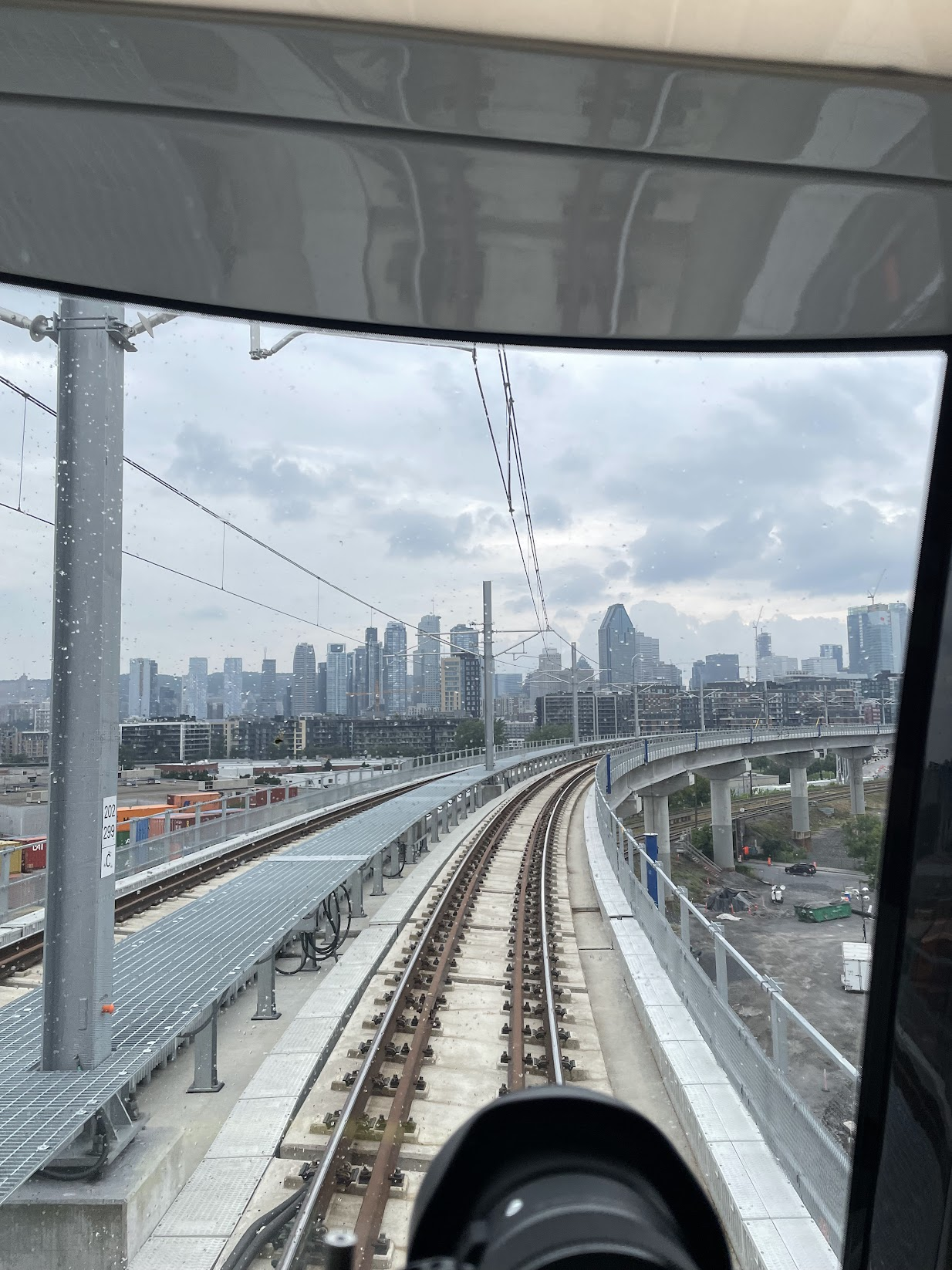
What’s interesting is that we have a few counterexamples we can study, and they make the case better than almost anything else. When Vancouver built SkyTrain in the 1980s, US cities of its size were all building light rail — but fast forward to today and SkyTrain moves more people than any American light rail system, including ones serving much larger cities (much less a local comparator like Portland or Seattle, which seems to have pivoted to a more SkyTrain-like model, albeit too late). In fact, SkyTrain is more heavily used than most American subway systems something I would say is in large part thanks to its very frequent service, possible in large part due to its driverless trains — a technology that wasn’t adopted in any of the new American subway systems that were built until just last year when Honolulu opened its Skyline system.
You might say — “well that’s little help now, what’s done is done!” and to some extent that isn’t wrong. Big cities like Dallas and Phoenix that have spent a lot of time and political capital building fairly long rail systems that move fairly low numbers of riders have missed the boat. But, US cities are still growing. Some cities like Austin or Nashville don’t have serious mass transit systems, and with the growing interest in “urbanism” and green mobility, I don’t doubt that cities like Dallas and Phoenix will have plenty more cracks at mass transit building. The question is — will the mistakes of the past be repeated.
The question is, I think: Are we trying to build transit which meets low existing demand? Which one makes sense for low-density, low-rise cities? Or do we want to create the type of transit that will shape cities around it, creating new high-density nodes at stations (like in Vancouver — I actually may write another post on how Canadian cities provide a roadmap to retrofitting American cities with mass rapid transit in the future), and actually attracting riders to get on board in large numbers. One future is much more exciting.





Leave a Reply