
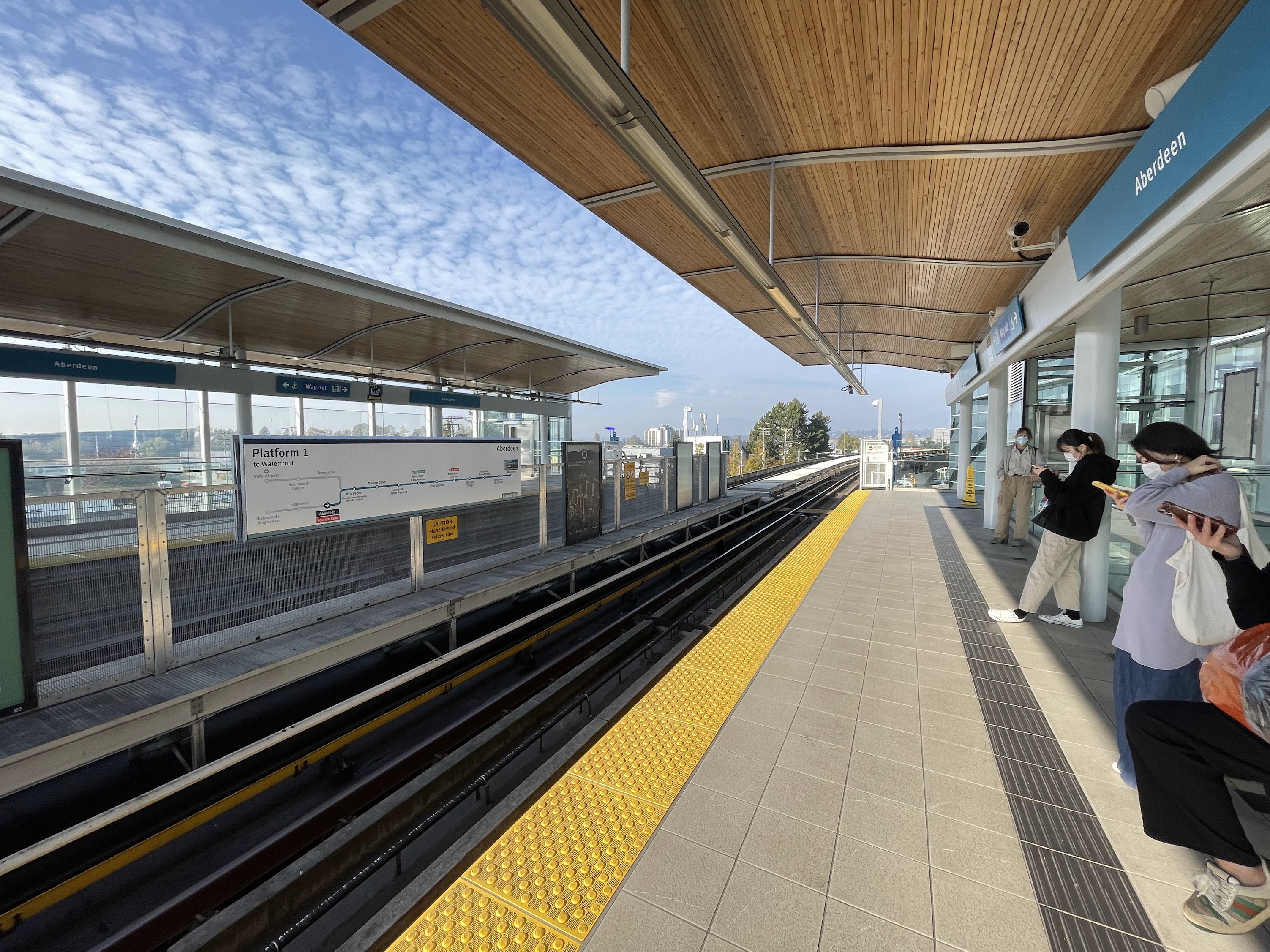
Technical transit advocacy is great, but it often misses a key about transit service.
A lot of what I do on my YouTube Channel is what I would call “technical transit advocacy” — essentially talking about the nuts and bolts of public transport systems and how we could create better ones, often by using different engineering and technology solutions.
I created my channel for a reason: I often find that North American cities in particular often make the same mistakes planning public transport. This isn’t necessarily about building systems that are abject failures, but rather missing opportunities to create service that would be more attractive for more people.

A good example of this could be the lack of any real large scale automated urban rail services in American cities, except for at airports — sure, light rail often does a roughly equivalent job, but we’re really missing out on opportunities to build something that isn’t just technically better, but could speed up the snowball effect that is transit ridership due to better, more attractive service. It’s a lot easier for city to transform around transit and for people to consider living car free when the train comes every three minutes and has twice the average speed! As I frequently mention, I think the great disparity in transit orientation between Vancouver, Seattle, and Portland can probably in large part be attributed to Vancouver’s far superior rail network.
Another great example of technical transit advocacy would be the huge discourse going on around the cost of building transit in the English-speaking world, as well as the highlighting and comparative analysis of various other geographies going on thanks to folks like those from the Transit Costs Project! A big portion of that is encouraging policy people to think about bringing more work in developing infrastructure projects “in house”, or more broadly essentially developing public sector expertise so that transit agencies can at the very least be better, more exacting customers.
Basically, technical transit advocacy is important, and it probably can have a real and important impact in helping the world get far more transit built, and dramatically increasing transit use. Of course, there’s also just a litany of reasons why doing things the right way (i.e. in alignment with technical best practice) is a good idea.
However, I want you for a minute to consider that this may not actually always lead to the optimal outcome — at least where we consider optimal being the situation where more people get on more transit. This is an issue I’ve been thinking about a lot because I’ve noticed patterns from city to city. I’ve also noticed myself engaging in discussion that doesn’t always sit right.
I’m going to call this the “not from here” problem.
To be clear, people saying that someone is “not from here” as a reason not to take them seriously is a real problem — and it usually means some degree of arrogance or exceptionalism is at play. But to some extent, I actually think a through line exists between this idea and a lot of the issues that do pop up with technical transit advocacy.
The idea of an issue here first arose to me when thinking about New York’s IBX, which I talked about in a previous livestream, between the lines in a video, and in this article.
It’s no secret that I and a lot of others do not like the choice of light rail for the IBX, and I think there are a lot of valid arguments that can be made here regarding cost, service, and the ability to provide a high quality orbital rail connection.
I see the sort of reverse situation from my perspective when discussion was happening some months ago around the idea that Canada might get high speed rail but would likely involve significant private involvement — quite possibly in a similar vein to the GO Transit improvement project. I saw a lot of people in the transit discourse arguing that this was a gutting of VIA rail, and that the introduction of private involvement in this space was a very bad thing. Certainly, nobody would disagree that the optimal way to develop affordable (both for the public at large and the rider) high quality rail services would be via a public sector-led approach.
Now, in both cases, does this really mean that one side is simply ignoring the “correct” solution? Of course not, and that’s because the solution that gets the best transit built might be a solution that also risks getting no transit built. Basic probability suggests that if the optimal solution is less likely to be built, it might not actually lead to better results, because while in some cases it might be better, in many nothing at all would happen!

The difference here is sort of one of personal circumstance, when you “aren’t from here”, then of course the optimal solution makes more sense, because the huge downside risk of having nothing built has a lot less of an impact on you. At the same time, the risk of inaction is super low for someone not living in a city, but super high for those who do. Unreliable buses that could be trains or overcrowded service is going to have a very real direct and regular impact on you: There just is not symmetry in the positives and negatives.
I would also argue that locals often are more attuned to political circumstances even if this means incorrectly assuming that the Overton window is smaller than it really is. That means that locals are probably better at assessing the political and societal risk and benefits of projects than an outsider.
There’s also the unrelated and separate concern that technical advocacy that criticizes transit projects will be used by bad actors to try to derail transit as a whole. Of course, as the research seems to suggest, most of the places that can’t build transit also struggle to build other big infrastructure projects, even roadways!
I think the point I’m ultimately trying to make here is that not all factors that need to be considered to create a city that is transit friendly for its citizens are in alignment with best practice or good policy. That’s not to suggest that these are not normal goals, but instead to question whether technical advocacy always leads to the best outcome. Perhaps it does in the long-term, but this is a conversation we really should be having more often!



Leave a Reply