
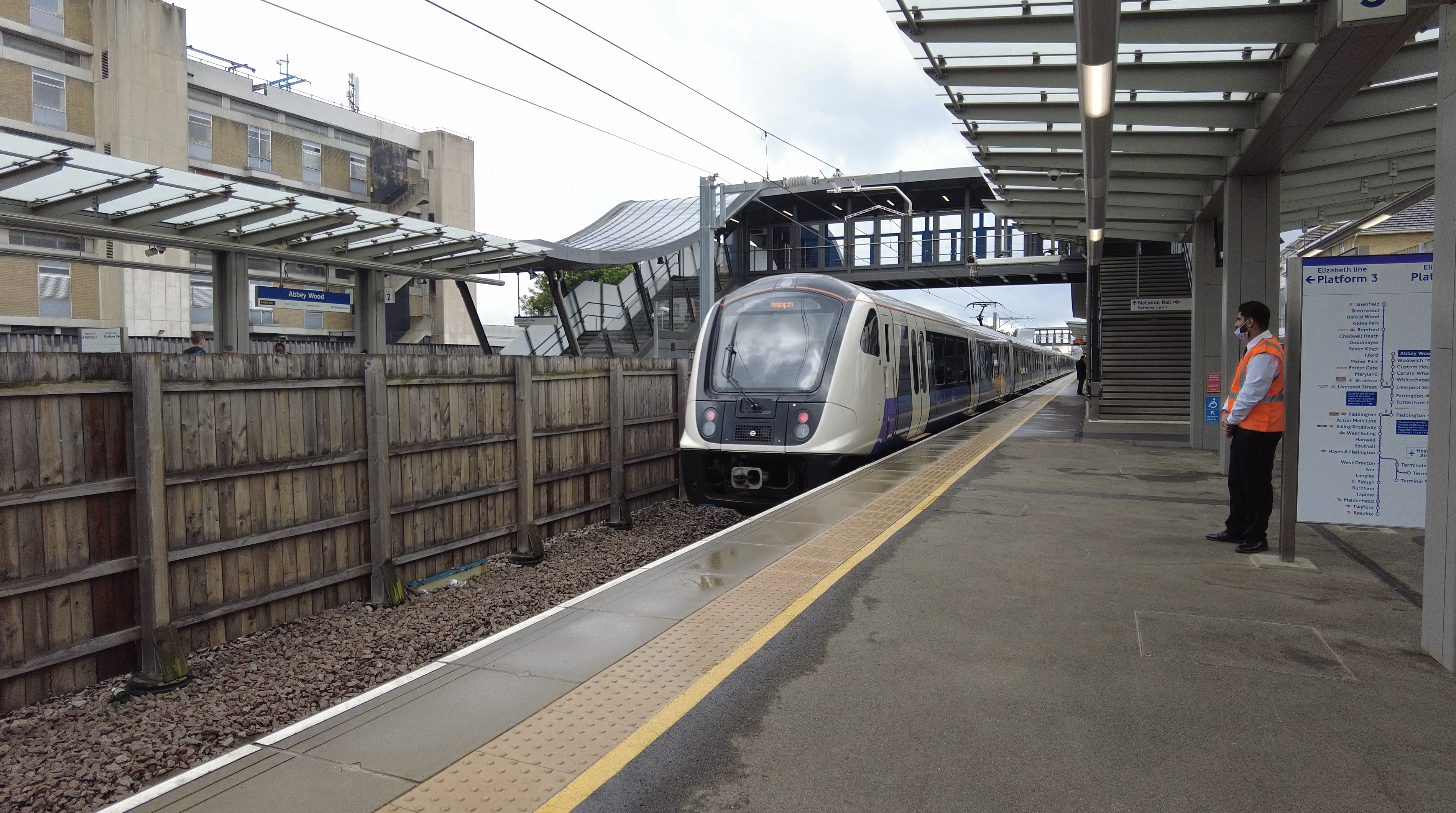
It’s amazing that this is still not at the core of transit planning and policy.
I’ve had a number of conversations this week and over the years in all manner of forums, where I or someone else was remarking about a transit line being slow — often for no particular reason (i.e. conservative speed limits, schedule padding) — when someone claimed that this was anti-transit (which more or less asserts that transit should be slow or that slowness is fundamental to transit!) or needless complaining that “there are surely other more important concerns than how fast transit goes”!
Beyond the immediate irritation that arises when people dismiss real concerns with something as imperfect as the average public transport system, I actually think this thinking is much more deeply rooted.

I’d argue that in much of North America (and probably other parts of the world too), the attitude which dismisses transit travel time and speed has been catastrophic.
This is fundamental to the justification to build light rail in many cities across the continent as opposed to suburban rail or a metro like the SkyTrain. Of course, not every light rail system is universally slow — Calgary and Los Angeles for example are rather fast — but most systems lean more towards the tram than the suburban rail side of the spectrum and are thus pretty slow and often unreliable! Slow and unreliable systems don’t attract riders, and such systems — particularly in America — end up with poor service.
But hold on, why does being tram-like make a line slow?

Well for one, speeds are typically restricted to those of surrounding traffic, and urban streets increasingly have maximum speeds below 60 or even 50 kph. By comparison, urban rail in a dedicated corridor can quite consistently hit a maximum speed of 80 mph, massively helping trip times. Another element that hurts tram speeds, especially when used for “high -apacity” applications as in American light rail, is long dwell times due to internal layout and a low door length-to-train length ratio. A lack of priority in the form of railroad-style crossing gates, and often not even strong signal priority also hurts the speed of such systems.
What’s worse about this is that advocates for LRT often either deny speed is important, or make misleading claims that LRT is as fast as subway/metro. In Toronto, this looks like gerrymandering a local bus route to compare with so that when it needs to light rail looks faster, and then pulling out an express route to claim LRT provides more stops. I’ve even seen claims that LRT average speeds are much higher than they are by using predicted speeds from the Eglinton Crosstown, a line which is 50+% subway! This isn’t a Toronto exclusive problem either: Alon Levy notes that tram advocates in Berlin claim that new trams will be just as fast as U-Bahn lines.

Even when it’s admitted that a tram route won’t be as fast as rapid transit (a term that should be reserved from tram trains), I often hear people say “but speed isn’t all that matters!” or “putting aside speed”. These are not good things to do when planning transit: fast is good! Throwing out what most studies say is the primary driver of transport choices (travel time) because you feel like it is a really bad idea. It’s like giving someone a car without wheels and then saying “besides the wheels, the car is really nice!”, you can’t throw out a fundamental element of the thing!
But, is this really an issue? Well, as I noted above, travel time is generally the biggest influence on peoples travel decisions, so faster transit is better-used transit, and harder-to-cut transit. I’d argue that those who suggest “most transit riders” have other priorities are simply devaluing people’s time — for example, prioritizing free fares over frequent buses (that reduce travel time) implies an extremely low value of time for those waiting for infrequent buses.
And people are more acutely aware of it than ever! Unlike 30 years ago, today anyone can while out their phone and check the fastest way to go from point A to B on Google Maps, so being fast is arguably more important than ever!

The impact of transit not needing to be fast has not been good, the US built tons of light rail systems in the late 1900s and 2000s and most move a fraction as many as the Vancouver SkyTrain (or Calgary’s not-so-tram-like LRT) that was built over the same period. Worse still, slow lines are expensive to operate because you need more trains to provide a given service level, which only further incentivizes poor frequency!
The solution to this is more fast transit: Instead of building LRT, build a larger bus-based system and guarantee service levels. If you’re going to build rail, build a subway or electric suburban rail (and don’t bury everything)! Transit can be competitive on so many more trips.



Leave a Reply