
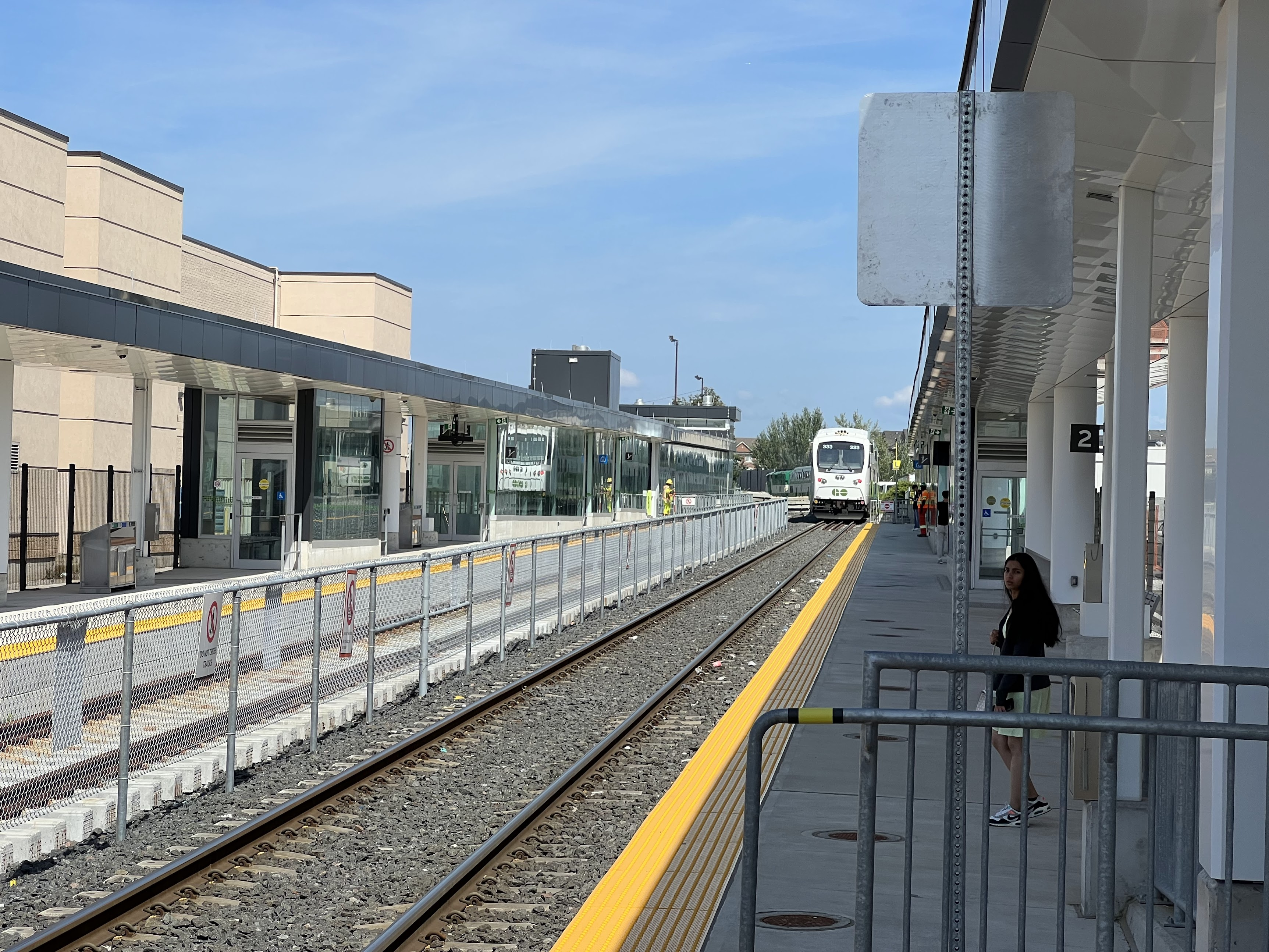
One of the most obvious things many of the major transit systems in eastern North America have long lacked is integrated regional fares; from New York, to Philadelphia, and of course Toronto. This is out of line with many of the best transit systems in the world, where fares are integrated across different modes and transit agencies, creating an easy-to-understand and seamless experience for passengers.
Fortunately, this is finally changing for Toronto, which will see a major step forward for fare integration at the end of February 2024, with the elimination of most “double fares” as was finally properly announced yesterday.
It’s actually been a pretty great year for fares in the Toronto region: the Presto card system once lamented for its bungled rollout and development now seems to be humming along. Passengers can now pay for transit with contactless debit and credit cards, and for the same price as a Presto card on the region’s most notable transit systems — the TTC and GO. Better yet, Android users can now load a Presto card onto their phone and refill it easily right there, and iOS support is meant to be coming soon — it’s been a real nice quality-of-life improvement for using the system.
Now, we’ve long known (since at this point it has been announced a bunch of times) that yesterday’s announcement was coming, and we basically knew what the changes were going to be, so I am a bit perplexed as to anyone who follows the space acting all that surprised about it. Lets look at how the changes pan out:
I want to note that although I have more “minuses” listed below than pluses, I think this is an overwhelmingly positive change, and most of the minuses are omissions rather than fundamental flaws. While I was quite annoyed at the current government for dropping the previous government’s discounted transfer system between TTC and GO at the beginning of their first mandate (they let it time out), they’ve actually done a lot of good stuff in the last few years and its been good to see.
The Pluses
Free TTC to GO
Yesterday’s announcement was in many ways all about the TTC, since fare agreements between GO/Metrolinx and the operators in the suburbs allowing local transit to be used to access GO for free have existed for quite some time. Of course though, since the TTC is the biggest transit agency in Canada, there are way more trips that potentially involve using it — so the impact is much greater.

With the new “one fare” program, you’ll now also be able to use the TTC for free when riding GO. Essentially, how this works is that for any trip where you get on a GO train or bus, you’ll now no longer need to pay for any connecting “local” transit.
For example, previously if you wanted to take a bus in Brampton to a GO station, ride GO to Union and take the TTC to UofT, you’d have your Brampton fare waived, but you’d still need to pay for the subway. With the new system, the subway leg on the TTC will also be waived. This will sort out one well-known problem (which I don’t believe has been rectified by other means) whereby the redirecting of GO services away from the York University campus in north Toronto that happened when the Line 1 subway extension opened suddenly forced many students to pay a subway fare to go a stop or two to campus.
This will also be very good for encouraging GO train use in suburban Toronto where the TTC is often an option, but also much slower. While GO riders living in Toronto (Scarborough and Etobicoke residents will benefit a lot) will still pay a GO fare for their trip, they won’t be “punished” with a TTC fare if their destination is just a little out of walking distance.
Free Local Transit Transfers
On top of free connections to GO, there will also be waived costs when transferring between the TTC and agencies like York and Durham Region Transit, Brampton Transit, and MiWay. In these situations, passengers will only need to pay the fare for the first system they get on. So taking a TTC bus and connecting to a Brampton one (do York Region Buses exist?) will only cost you a TTC fare, which is great! The impact this will have on the bottom line of transit operators should be small, and the removal of an illogical fare situation is very valuable.
It’s often not appreciated in nuanceless Twitter and Forum discussions, but transit being confusing is a big deterrent to people using it. Making it so you don’t get charged when you switch buses crossing city lines or so that any trip involving GO transit only involves the GO transit fare simplifies the functioning of the fare system a lot. The timed two-hour transfer system people enjoy in Toronto will also be expanded in this deal, with GO trips gaining a three hour transfer window.
And Minuses
Of course, it’s not all sunshine and rainbows, and the changes that have been made are not super ambitious. They reduce the most illogical elements of the existing fare system — paying a full TTC fare that could take you downtown just to get to the GO station down the street, or paying twice for a short trip that just happens to cross a municipal boundary and involve two buses (the transfer should be punishment enough). However, these changes leave some things to be desired and I think will eventually need to be followed up by more changes (In part because since waived fares will be reimbursed by the province, there may be an incentive for operators to adjust their fares to “game” the system).
Confusing GO Fares
For one, GO fares remain unchanged — this is fine in isolation, but illogical when you consider that we are supposed to be turning GO into a part of the rapid transit network.

It does not make sense that one part of a unified rapid transit network costs more than other parts, and what’s even more concerning is putting a premium cost on a faster mode. This has been a key element in so many North American commuter rail systems, GO included, and is counterproductive for growing transit use and not making it a niche service for 9-5 commuters.
This is even more problematic when you consider that a GO line has more capacity than a subway line as a byproduct of the huge trains and potential for similarly high frequencies. If we want to decongest the subway and get more people onto GO (which many would be happy to do thanks to the more spacious trains, many nice new stations, and faster speeds) we should not be charging a premium price for it. The subway and GO already offer a couple of potential locations where riders travelling towards downtown could get off the subway and onto a GO train (Kennedy, Downsview Park, and soon Bloor/Dundas West) — discouraging this is a bad idea. When I was in Berlin, one of the nicest elements of the fare system was that I could ride any train within the zones I had paid for — I could always take the fastest route!
When you consider the ability for the transit system to move people, it’s probably not even cheaper for the government to price GO fares at a premium, because GO capacity can be expanded much more easily than subway capacity. Not only is basically the entire GO network above ground, but there is also tons of low-hanging fruit for adding track and better signalling as well as trains to increase capacity long term at reasonable costs. Expanding subway capacity often means costly underground work retrofitting in new signalling, expanding interchanges, and building new lines. The more transit riders on GO, the more transit expansion can be cost-effective mainline rail work, and the less it needs to be painfully-expensive subway work.

It’s also pretty clear from the above image (from Metrolinx’ fare integration business case) that GO Expansion is by far the highest value transit project we are building in the region, and GO meeting its full potential will simply not happen with a premium fare scheme that treats it different from Toronto’s existing rapid transit system.
Now, some in Toronto have historically been against aligning GO fares with subway fares with the very odd notion that this somehow undercuts subway ridership (the subway that’s so crowded in sections and hasn’t been able to accommodate additional riders for decades). Much of this feels like classic parochialism “Oh no the city I live in will see its transit system lose ridership, as the transit system for the province gains ridership! The horror!”, but it’s also just counterproductive for the cost effectiveness reasons I mentioned above.
In truth, letting some trips off the subway onto GO only unlocks the potential for more shorter trips to be completed on each subway journey — potentially massively boosting ridership while also cutting journey times for those who make the switch. The very strange “GO isn’t for us” attitude some Toronto politicians have when lots of Torontonians already use GO is also only cemented by making sure riders pay more to get on it than the subway.
Of course, the issue here to some extent comes down to the subway being treated as “local” transit even if it clearly has a very different cost profile for construction and operation. If costs must remain neutral long term, I think it would absolutely be worth raising subway fares and lowing GO fares to align them simply because having the rail system priced the way it is will ensure it doesn’t function to its full potential. This also means acknowledging that the subway is a regional transit system already — it crossed the lines between the old cities that formed Toronto, it already crosses into York Region (and will again in the future, and possibly to other cities), and it’s a key part of many journeys that begin outside of the city of Toronto. Just because many of its users don’t live in the city doesn’t mean they don’t have a stake.
Edit: I think its worth pointing out that having lower GO fares would also apply more pressure on Metrolinx to reduce the system’s operating costs. (Right now every GO train has three employees on it, subway trains have just one, and the Ontario line will be driverless – while this is not going to be possible for GO for a long time reducing crews is obvious!)
Ultimately, the only way we can have GO properly augment the subway and act as an express rail system is by aligning its fares with the subway, which indeed either means GO fares become flat for some sections of the network (which creates its own problems) or the subway gets distanced-based fares (which, as a reminder, do not need to be higher than the fares of today, they just need to be graduated). This is how things work in London, Tokyo, Paris, Sao Paulo, Berlin, Sydney, and many more cities, and yes — Toronto will be just fine!
Avoiding Zones is Painful
A big part of the issues with the current fare improvements is that they avoid implementing zones for any system that doesn’t currently have them (GO has zones already, though they aren’t openly communicated to passengers) as was proposed in the semi-recent TRBOT fare report from a few years ago.

While we can go on all day about what zone system is best, virtually all great transit systems have some form of distance based fare — this makes sense because travelling longer distances costs the system more, and most urbanists would probably agree that we should encourage density and colocation. The Board of Trade report shows a viable zone-based fare system, which, like literally any fare system, has winners and losers; but it minimizes the losers within the city of Toronto by making it two zones (along with a two-zone base fare). While implementing distance-based fares on the subway would require implementing additional gate lines and tapping out (assuming we don’t go the way of Germany and do away with gates altogether), this is trivial in the scope of Canada’s biggest city and the impacts its fare system has on the usability of transit.
Since the current plan doesn’t put zonal pricing on the subway or buses, it may well be the case that a transit rider chooses to go the slower way, for a lower fare, or they might go almost as fast on an expensive subway, but without paying as much as for a much more affordable surface train. I just generally think the avoidance of zones is a classic “make nobody angry” move that makes the system worse than it could otherwise be.
Mixed Fare System Issues Remain
One last issue I think is worth pointing out that hasn’t traditionally been part of conversations about fare integration is the different way you pay for different transit systems in the GTHA. For example, on some buses you pay upon boarding, and some at the stop, the same is true of streetcars (and “LRT” lines), while on GO buses you tap on and off on the bus, GO trains are on and off at stations (unless of course you have a default trip) and the subway is tap on (and technically don’t tap again unless you leave the system!).
The different ways you pay for transit on different systems is confusing and can make easy to forget to pay, or end up paying extra (even I can’t remember if VIVA requires me to tap off at the end of my journey the odd time I use it). Making this consistent, or at least putting more obvious instructions for riders in stations and at stops would help a lot, but you can kind of see how this is connected to the different ways fares work on different systems. If everything was zonal, you could make everything consistent (tap on and off on all modes, or tap on and off on any rail vehicle for example), but we have not done this.
On the whole, despite my qualms with some of the details of Toronto’s newest jab at reasonable fares, this is clearly a step in the right direction. The changes remove some very irritating situations that drive riders away and make transit confusing to use, and makes a lot of trips more affordable (and also brings down the cost for some trips people might not have been making).
I’ll be excited to see the impact the changes have — for example, perhaps GO ridership will jump in the outer parts of Toronto, where until now taking “the Better Way” to the GO train has meant taking the expensive way, unlike in Mississauga or Durham. That might well also benefit the TTC who will see more people using their services to connect to those from other agencies.
My hope is that over the years as riders get used to the new fare system and fare revenue and ridership numbers stabilize, the transit agencies (who managed not to figure this out for decades) will realize the obvious: that some foregone fare revenue is well-worth making the transit system easier to use, and a better choice for more trips —which will incentivize more transit use across the board, but especially on longer trips! And finally, now is a good time to think about expanding Presto to more cities in the province, especially places like Kitchener-Waterloo.




Leave a Reply to Curtis MelnickCancel reply