
People often think their city is uniquely bad, though this is usually a byproduct of mostly only experiencing services like public transport and drivers in their own city, as well as a number of other biases that I discussed in a recent article.
However, I actually think this issue (which I largely chalk up to a lack of familiarity with other places and the relative performance of your local system/city) can be quite effectively managed if people just take the time to learn about other places.
If you enjoy my content, consider subscribing to my blog:
or supporting me on Patreon:
Your support will help me bring you more content faster!
The best example I can think of is — Japan. Japan has broadly excellent railways that are so extensive that the need for good buses and trams is probably a lot lower than in other countries. However, Japan still manages to be surprisingly bad at some things.
For example, want to buy a Shinkansen ticket using the internet? Good luck. Want to understand how much you might pay for a multi-leg rail journey before you make it easily? Good luck. Even just finding good maps of the Japanese rail systems can be quite hard! I’ve always liked the look of the Tokyo Metro/Toei Subway map, but I find it very hard to use or to get a sense of the network from.

Of course, none of this makes the Japanese transit system bad, but it does show you that even the people who gave you subway through-running, high-speed rail, and smart transit cards have some blind spots.
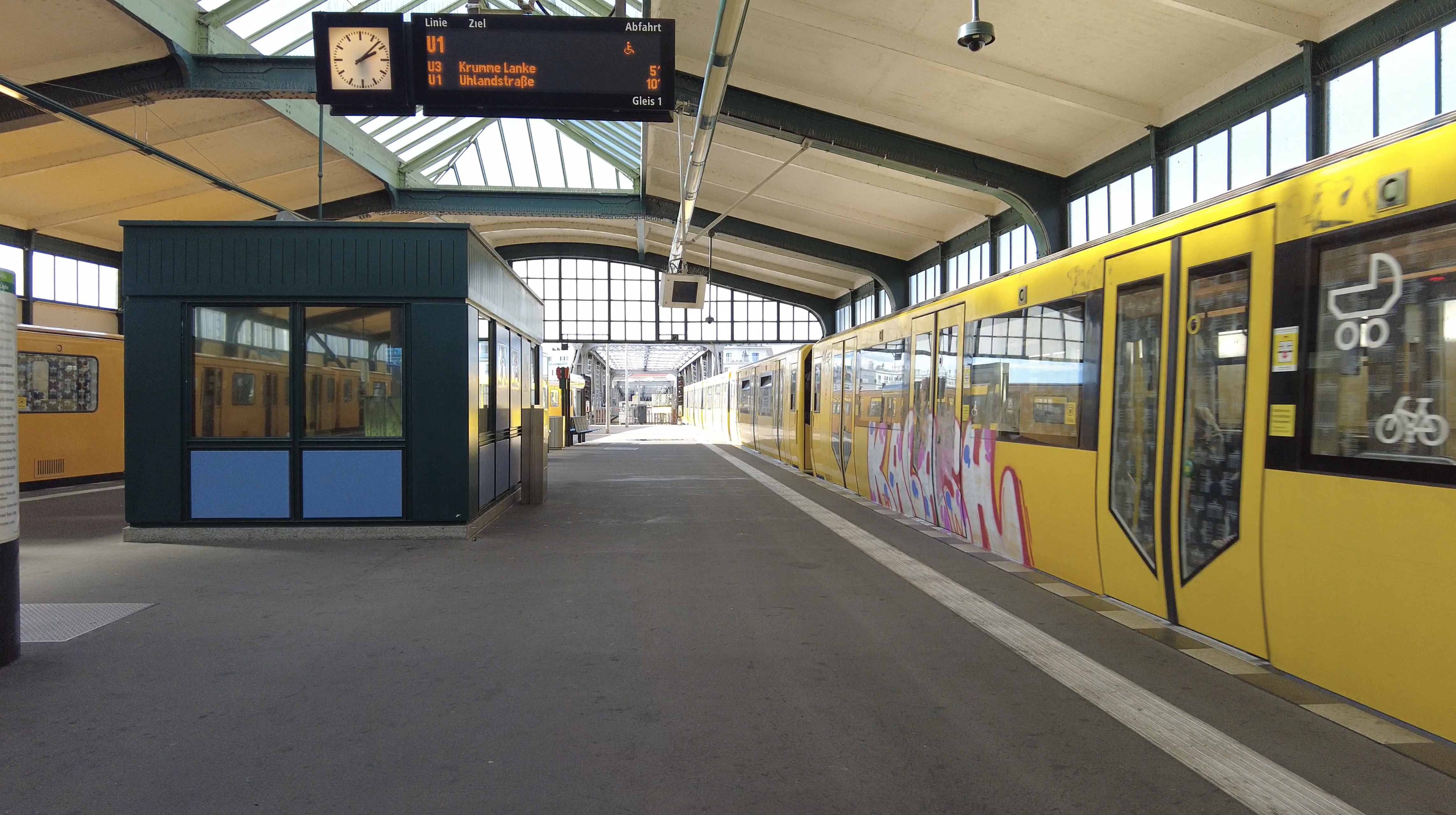
And you can say the same for transit in Europe. While it’s broadly very good (in terms of service, wayfinding, & digital enablement), vehicles are often in shockingly poor condition as I talked about in a previous Berlin blog post. Now, we can debate all-day about whether paint on trains has a real impact on the experience as a rider (the printed window overlays to discourage vandalism surely do), but it’s probably a lot easier for someone in Berlin to see why vehicle cleanliness is important, and for someone in a city like Toronto (where I might have seen graffiti on a train once in the decade I lived there) to dismiss the value of trains that are in good shape!

Getting a sense for where different transit systems excel and where they fall short gives you more perspective, and also a sense that nobody has transit entirely figured out. There are strong points and weak points to almost every system, and while I will take a frequent graffiti’d train in Berlin over a half-hourly but clean train in the US every day, Berlin really is often worse on cleanliness!
The message shouldn’t be one of negativity though (e.g. “transit here is bad, but it can also be pretty bad in Europe, or Asia!”), instead we need to be open to learning from anywhere and trying to understand what works and why. The question we should be asking is “how can we combine the engineering genius of Japanese rapid transit, the wayfinding of European cities, the vehicle condition of North American cities?”





Leave a Reply to Reece MartinCancel reply