Making videos about cities around the world is fascinating for a number of reasons, but one of the most interesting things I’ve learned over the better part of a decade doing YouTube is that no matter where you go, everyone thinks their transit is very bad (except perhaps for Switzerland and Japan, which truly have really good — although not perfect) transit services.

For example, any time I make a video about, say, Germany, I’m guaranteed to get lots of comments complaining about Deutsche Bahn. Now to be clear, DB does have its problems, but even compared to riding trains in other places in Europe (the UK for example) I see lots to like. The fares are more reasonable, the stations are often better, and the very quality of the rails trains ride on seems far superior. Despite the German rail system having its problems, there is a lot to like!

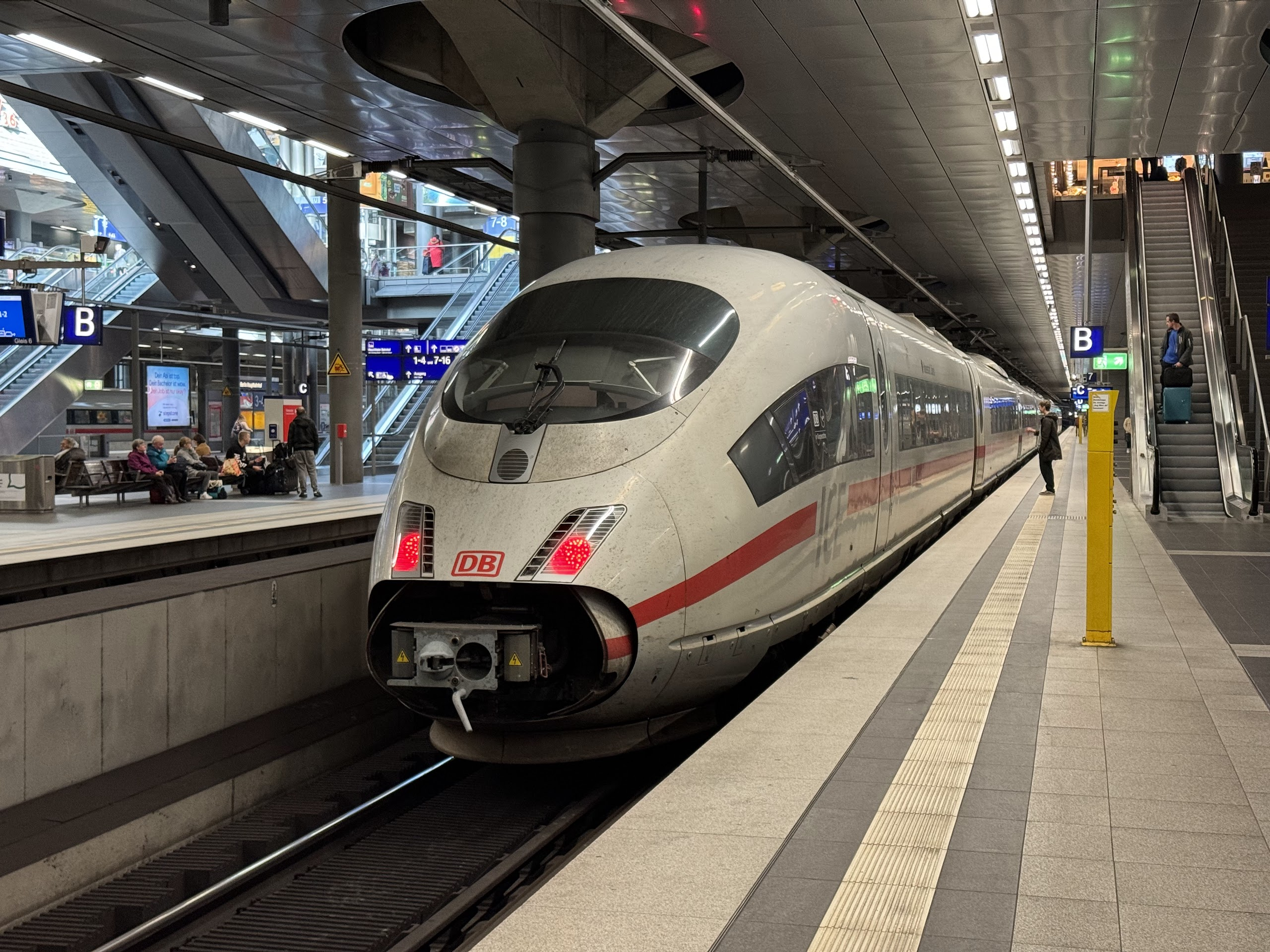
Deutsche Bahn ICE train in Berlin.

If you enjoy my content, consider subscribing to my blog:

or supporting me on Patreon:

Your support will help me bring you more content faster!


The natural question this raises is why do people spend so much time complaining about something that is objectively good (and this can be said for anything from suburban rail in Australia to the Metro in Barcelona and the buses in Toronto).

Personally, I think it comes down to a large number of effects and cognitive biases. 

I think the first big thing is a sort of local bias. People are often (if not always) trained by negative media coverage to have great disdain for, if not downright hate, the place they live in. Local news coverage of a transit system always seems to be biased towards problems from crime, to cleanliness, to infrastructure and funding issues. Most of these issues are issues everywhere to some extent, but people tend to only consume local media for their own locality and so they only hear about their transit in the context of these problems. People who participate in more globalized discourse around transit be it in academia or even just Twitter tend to have a better balanced perspective on the common problems transit faces.

A Toronto TTC bus.

There is also a sort of grass is greener bias where people seem to see the best in other places. I have come to really understand this one personally because it’s almost universally easy to feel good about that which you don’t have. It seems that the way our brains and desires work is that we tend to take those aforementioned negative associations that we have towards the places that we call home, and ignore them in other places — sometimes this is because we don’t know the unique way problems present themselves, and sometimes I think it’s because we don’t know where to look. I’m also certain that people are more willing to forgive problems in a transit system they are visiting as a sort of superfluous act of god, whereas we tend to place blame more directly on systems which we are intimately familiar with. There’s also an extent to which we allow novelty (consciously or subconsciously) to overshadow issues we see in front of us.

One particularly nice case I see a lot of is complaining about something that is not universal. For example, I hear Australians complaining about how bad their suburban rail is, even sometimes to North Americans who have no system on continent that competes with any of those in Sydney, Brisbane, Perth or Adelaide. Something similar happens with people from France or Germany complaining about poor intercity or rural rail service — when such services are essentially nonexistent in North America or Australia!

Such localisms can even happen from city to city, for example I hear Sydney-siders lament that Sydney Metro has “almost no” seats, even when it does actually have many seats (maybe not facing your preferred direction), and Sydney is just unusual in having an electric rail system that is all double-decker and all with dense transverse seating, which is quite uncommon globally!

In any of these cases, people are complaining that something they have isn’t satisfying them, even when many people don’t have access to that thing at all (this can obviously be thought of much more broadly than transit).

A Sydney Metro train. MDRX, CC BY-SA 4.0 https://creativecommons.org/licenses/by-sa/4.0, via Wikimedia Commons

There are also elements of problem frequency and perceived severity at play. It’s the case that 1) people tend to put disproportionate weight on bad experiences, and 2) bad experiences are usually not that common. For example, most transit systems are on time most of the time (70% on time performance is seen as horrible, but that’s a solid majority of the time!), but the one time you are delayed you might have a very bad experience. This situation where bad experiences are not that common but really stick with people is naturally going to make it so that people who use a system a lot have far more negative associations. This is especially true because as mentioned earlier, someone using a system irregularly is more likely to write off a problem as a freak incident.

I also think the familiarity with local conditions that people tend to have has a huge impact on their perception of problems. For example, you’re going to notice a lack of cleanliness and it’s going to sting more when you’ve seen news coverage of a shrunken janitorial budget, or are even just aware of it. You’re also absolutely going to notice if you live in a place with good transit that is going downhill, even if the effect is slight; outsiders see good transit and you see declining transit.

It’s also just the case that problems are more real when you experience them. People can talk about how great transit in Stockholm is, but if you just got home from a commute on a particular dirty, crowded metro train, no amount of nice language and compliments are going to make you feel that the system is fundamentally good.

The natural question to ask then is: “what’s the antidote to this?”.

I think the best one, and the one I try to cultivate is… perspective. I personally believe everyone can benefit from seeing and understanding the world, and that doesn’t necessarily mean travelling! You can learn so much about other places in 2024, not only through the traditional methods of reading, watching old films, and talking to people from those places, but now by watching on the ground videos, enjoying all manner of local independent media (that’s often people like me), and of course enjoying 3D maps and street view imagery.

I think that a holistic approach to learning about places will teach you a lot about what makes them good, but also their unique challenges and struggles — People always underestimate how different other places might be and often overestimate how much they know of them. If people can gain a wide knowledge and perspective about cities, we should hope that most people would feel content because on any normal distribution most data points will fall around or above the middle! You should learn about the places that do things like transit well, and those that do it poorly, but also the wisdom and respect to understand that good ideas and good places often exist in the most unexpected settings. I talked about it in a recent video, but for example I think the 24-hour nature of New York city is amazing, and a city like Copenhagen that learned from & benefitted from it (Copenhagen has one of the world’s only 24/7/365 metro systems).

I think that once we understand the context in which we exist, we can go about trying to understand and improve the conditions. Something like bad transit sucks today, but when you understand the world, and some of the history you’ll know that it need not stay that way, and you can personally be involved in making things better.

30 responses to “Everyone Thinks Their Transit is the Worst”

  1. The key thing in comparing home and away for transit is the daily context. When you are away from home you are often on holidays and relaxed, you generally travel outside peak times, and you are not particularly time constrained. At home you are travelling home from work on a crowded dirty late train and when you get in you have to pick up the kids from childcare (explaining why you are late and paying the late pickup fine) and then cook dinner for them.

    1. Yep, another great point about how the context being different changes perceptions!

  2. Strange how we support our local team, when they are only average, but complain about fairly good transit, like NY or Toronto subways. The press doesn’t publish much good news. There is no market for it.
    On the other hand, 70% on time is horrible. Especially when “on time” is defined as within 5 minutes. I have seen how Japan can do much better.
    Some years ago, I heard a psychology professor lecture about the “no excuses” rule in her classes. Lateness was punished by a grade a day. At the beginning of the semester, excuses were offered, but politely rejected. “Sorry, but that is the rule.” At the end of the semester, compliance was high. Students no longer relied on excuses and modified their behavior to produce their work on time. Transit shoukld do the same.

    1. I certainly believe that pressure often creates diamonds, its hard to know how good things can be without creating a scenario like this and testing every so often. Trains run on time in Japan for a litany of reasons that are hard to understand if you aren’t used to trains *having* to run on time!

    2. It needs to be done the right way though. Years back in Melbourne (the Australian version) the tram and train providers were fined for late and cancelled services. This resulted in it being more cost effective to cancel a service than have three run late, depending on operator and route.
      So, a few times I walked the two hours home without seeing a single tram go past in peak hour because it was a long, lower demand (67 still the same route I think), tram route and the most cost effective to cancel and minimise fines. I think they were due every 8 minutes in peak times back then. (I should have walked across to the station and got a train, taking longer if things ran on time but much quicker on those nights however I expected a tram to come at some point and started walking out of boredom.)

      That is an example of the incentive working badly.

  3. Good thoughts. I think a related factor is that when people visit another city, especially one that is distant and different from their own, the fact that they are on vacation creates a sort of halo effect around all their experiences. So many Americans I know enjoy riding a train or tram when in Europe but wouldn’t think of boarding one in the United States. Part of that may be attributable to better quality service in Europe, but I think a large part is also related to seeing transit as part of an exotic experience enjoyed abroad but not relevant their daily lives in their home cities. It reminds me of people I know who make a big deal of seeing Broadway shows when visiting New York while ignoring the high quality regional theater companies near them.

    1. Yep this is a very apt comment. When people travel they tend to do interesting things and go out, at home many just stay in their house / apartment and work etc!

  4. Another terrific essay, especially regards to this line: The natural question to ask then is: “what’s the antidote to this?”.
    Most of us can describe what we don’t like about our transit systems, especially people like me who have been using Toronto’s transit since 1975. I like the analogy of I know when a house is on fire, and can tell someone, but that doesn’t mean I know how to put out the fire. Most informed riders know what doesn’t work, but we have no ability to do anything about it, do we? Your “declining transit” comment is spot on: the system is dirtier than it used to be, slower, more dangerous etc. We hope those who plan and make policy want to do the right thing, but how do we know, how much do they care. I know a lot more about transit now from following you on YouTube and these articles than I did before, a lot more. Riding the TTC for 47 years tells you a lot but not everything. Though I can read between the lines, I’m curious as to what you think a model (not perfect) transit system is a city as big as Toronto should look like, say you are now in charge of creating transit in a brand new city of 3 million people. What would you do? One more topic I hope you discuss- my apologies if you have already: my understanding is Toronto remains one of the leading cities in North America where passenger fares pick up a greater share of costs than almost all other cities – are we in the top five? So what would the TTC look like if we were not in the top five, but say 15th, or 25th, or 45th? Keep doing the fantastic job you are doing. Michael

    1. Thanks for your comment Michael!

      I think improving things comes on a spectrum, this piece is great: https://www.londonreconnections.com/2021/the-path-to-public-transport-enlightenment/

      I think a good target is probably a German city like Hamburg or Munich (Berlin is on another level), I think Toronto remains among the highest for farebox recovery and I think this is good, it shows how efficiently the system runs! Lots of passengers, fairly low costs. We do need more subsidy though!

  5. Problems are more real when you experience them, that’s true. Even in a world-class transit city like Hong Kong, we complain about bad transit every day. Unstable intervals on MTR lines; sinuous, low-speed and always being cutting bus services; forever rising fares; and the worst thing is that most people here have been deprived of those non-transit commuting options like riding a bike. We are forced to live a transit-dependent life. In case the operator failed to provide reasonable service (whatever reason), everyone suffers.

    Comparing to a non-transit city, transit service in Hong Kong seems abundant. But only when experiencing such transit-dependency could you realize the situation is not that good.

    1. Hong Kong is the perfect example of a place that outsiders think has no problems and that locals probably still don’t appreciate enough (though the MTR does get lots of love!)

    2. I’m from California, but I’ve been to HK 7 times (the last time in 2014), including staying 4 months at Tiu Keng Leng’s Metrotown TOD. Tseung Kwan O actually has solid off-street bikeways–they’re almost all bidirectional, are grade-separated from roads, and clearly demarcated from an already wide sidewalk (although TKO’s blocks are insanely long and while there are ground-level shops they don’t open out onto the street!) While I was delighted with the 2.5 minute frequencies on MTR urban lines, what I wasn’t pleased with was the relatively sparse coverage. Of course, that has to be chalked up with 1. HK’s extremely mountainous topography, but also 2. Hong Kong’s sky high subway construction costs.

      I actually think people in HK are complacent and smug about their transit. They think it’s the world’s best, while never wondering why Seoul’s subway, for instance, has far better coverage (due to lower construction costs) while providing similar frequency to HK and thru-running regional rail services (that the MTR doesn’t have).

      1. MTR is always calling itself a world-class rail company, which reflects its complacency and smugness I think. Most part of MTR network is good service, however there are still weak points and people do suffer from those. Passengers on Tuen Ma Line often observe unstable intervals like a 6-min followed by a 2-min. Only infrequent shuttle service on the LOHAS Park Branch during off-peak hours, up to 10-min interval…

        Tseung Kwan O is an example where residents encounter below-satisfaction bus service as well. Again, look at the LOHAS Park which is so-called a TOD. Besides some peak-hour-only routes, most routes at LOHAS Park Bus Terminus towards outside TKO sinuously deviate into TKO town center, which looks nauseously and wastes a lot of time. It‘s no exaggeration to say that residents here are FORCED to take the infrequent MTR LOHAS Park Branch shuttle due to bus unattracting.

        Bikeway networks do exist in new towns in HK. But as local bike advocates say, those are designed for fitness purpose only, not for commuting. HK is the most bike-unfriendly city among all “transit cities” on the world. The government here designs bikeways for recreation only and it deliberately makes obstacles in bike commuting.

        Transit in HK is indeed world-class, but still a lot to improve. There are local advocates fighting for it.

  6. I would rather not complain about our Metro in Dhaka. It is one of the only transit I have rode in my life where I feel safe, moving and welcome.
    But, just like you said in your own video I really wished the system was in house instead of forced on our throat through large country financing corp’s like Jica. I am more than happy with platform gates, accessible rides, clean station. But, financial accessibility seems to have exited the minds of international financiers in MRT – 6.

    1. Anacinus Lamius Avatar
      Anacinus Lamius

      The comparison method is called 比烂 (litterally “comparing with sth worse”) in Chinese, which means to instead to treat some uncomfortable experience or small butactual problems you feel real as signals of this sytem is facing desperated situations of this system or seek radical solutions to solve those problems to make it “better” (actually prefect), try to compare other systems in same catergories facing similar problems and then you will find that solutions using in other systems may be not the prefect, and the system you experienced would have the best solution for those problems.

  7. Excellent article Reece!

    If I may I’d like to add expand on one of your observations:

    On Time Running figures. For anywhere that has a frequent rail service these figures are often interpreted in far too negative a way and seeing figures like 70% On Time Running is seen as being terrible. In Sydney, Australia, people are obsessed with how late trains are running because this information is made available through a public API that lots of apps are built upon. Following an unavoidable incident trains begin to be shown as being very late. Individual suburban trains will be running 3 or 4 hours late, and this is shown clearly to everyone on their phone, and in social and legacy media. However we nearly always manage to keep a good frequency of trains running – so if you turn up at a station you’re still going to get a train to your destination in under 10 minutes. It just so happens it’s running 4 hours late which is irrelevant to anyone except operational staff.

    1. For sure, there is always a risk that data provided is interpreted in a way that over or understates a problem. As you say in the case of a headway focused system late arrivals are not nearly as important!

    2. Albert, the misuse of data in Sydney rail and bus services is called fudging the figures to get the answer you want. It goes back all the way to 1788 and the foundation of New South Wales.

  8. I may be an outlier but I have always been happy with my transit experiences here in Montreal; when I was a student on it every day, when I had a job downtown and I lived on the west island, and now when I use it sparingly as I work from home. For sure I would be happier if the west island buses were more frequent, but when I see them pass as I walk in my neighbourhood they almost never have more than five passengers, so it is no surprise they go at half hour intervals; in fact, with such low ridership I am lucky they pass that often.

    1. Well, this is the classic chicken and egg thing! Ridership is probably low because the frequency is so poor. Even the West Island should be able to support a decent service level!

      1. Michael 'Long Branch Mike' Olivier Avatar
        Michael ‘Long Branch Mike’ Olivier

        The West Island will also be getting a REM branch soon, I expect local buses will feed into it. Given the size (& cost) of the REM stations even in suburban areas, I really hope the local municipalities allow considerable TOD, to make the frequent REM service viable, improve mobility, and allow car-free living.

  9. Like you, Reece, I notice nations’ strong tendency to be overly self-critical–you said it about Germany, and the same is true for Singapore. I’m American, but I follow Singaporean transit a lot–it’s one of my favorite cities. Singapore has some of the most vibrant online transit discourse in the Anglosphere, but with that discourse comes a lot of self-criticism. Some of it’s deserved. Singapore is high-rise Markham–clean, manicured, and master-planned, but with stroads and crap bike infrastructure. It’s not Tokyo, which is also clean and orderly but much livelier due to much narrower, more walkable and bikeable streets and zero street parking. Nor does it have Tokyo’s express trains.

    However, unlike Hong Kong, Singapore does have large swathes of low-rise development with narrow, quiet streets and low speeds that are well-linked by park connectors–these neighborhoods would be very Tokyo-like if you removed the street parking and added more mixed-use. Also unlike Hong Kong, Singapore has a rapidly expanding subway, despite also suffering from very high construction costs. Even Singapore’s “master-planned manicuring” makes it more walkable compared to Hong Kong’s “organic, gritty chaos.” It means excellent historical preservation, ample sidewalk trees, and covered walkways. Even things like store signs and building facades in Singapore being uniform, subtle, and well-maintained compared to the jumble of neon signs and illegal additions in Mong Kok gives Singapore a “neatness” that adds to walkability.

  10. I love my transit in London. Sure, when you live and spend so much time somewhere you start taking things for granted. Your daily commute goes as usual most of the time and you just don’t notice. When it’s disrupted, however, you make a big deal out of it. In the end, we only hear about the sum of all the bad experiences but not much at all about all the times things just work as expected.

  11. I’m from Switzerland, and I do think our system is quite good. Especially compared to other countries. However, when I am complaining to people, it is because our current government is quite pro-car, and I do think that Switzerland will be getting behind in the next 30 years or so if nothing is done. It is a complaint about the future, not the present.

    – aging infrastructure. Especially in the French speaking part, the rail infrastructure hasn’t been properly upgraded in the last 30 years, and now we are paying with service interruptions (up to 6 weeks), longer commute times (+30%) to try to correct the neglect that has been going on for so many years.

    – the government announced highway expansions, while at the same time trying to block a (much needed) new railway line between Lausanne and Geneva (where they want to expand the highway).

    – the government making it harder for local government to establish 30km/h zones instead of 50km/h.

    – the refusal to do anything new (especially high-speed). We are in a patch phase, where money is only getting spent to straighten a curve here, improve the signaling there. They built half a higher speed line between Bern and Zurich in the 2000, and now they don’t want to even consider to finish it.

    – the absolute inability to built proper bike lanes. New road upgrades are built all the time, and they still manage to mix bike lanes with traffic, even when there is enough space for proper separated lanes.

    – international connections are getting decimated. Collaboration with Deutsche Bahn is getting hard.

    So frustrating that the government is still considering cars as the priority, even though we shouldn’t be doing that with climate change and modern urban considerations.

  12. This is so acurate, when I lived in LA everybody complained about the public transport but I used it to go to college and I had no complaints. Now driving in LA, that’s a horrible experience

  13. For the record, I don’t hate Berlin transit. I see lots of room for improvement, but I know that on the whole it’s pretty solid (unless there is industrial action on, of course …). Deutsche Bahn, not so much. It’s a, pun unintended, pretty bad train wreck. DB is steel reeling from the failed attempt to privatize it decades ago, and not much is done to improve the situation. There is a lot of talk but not mach actual action.

  14. […] “Everyone Thinks Their Transit Is The Worst” (Reese Martin of RMTransit). […]

  15. […] People often think their city is uniquely bad, though this is usually a byproduct of mostly only experiencing services like public transport and drivers in their own city, as well as a number of other biases that I discussed in a recent article. […]

  16. Abdullah Rizwan Avatar
    Abdullah Rizwan

    Great article. Although, I wonder, what if you make a good comparison of places around the world that have a similar population to your hometown. And then realize “oh, my towns transit is actually the worst” lol.

  17. Chiming in to say that I live in Calgary and love Calgary Transit! I wish we had regional rail now, but I hear things are finally moving on that.

Leave a Reply to Reece MartinCancel reply

Trending

Discover more from Reece Martin

Subscribe now to keep reading and get access to the full archive.

Continue reading