Countries such as Canada, the UK, and Australia often struggle to build transit projects cost effectively, and a big part of this is a lack of in-house expertise at transit agencies. If a transit agency doesn’t have someone on hand who can draw up a plan or advise on a technical issue, they will typically hire an outside consultant, this is not only expensive, but it also probably doesn’t help build internal capability, so reliance on outsiders is maintained.

Construction of the Ontario Line.

Now, sometimes consultants might make sense — there are some things that any organization might only have to do very infrequently and for which it doesn’t make sense to have someone on staff, but transit systems (at least in big cities) shouldn’t be doing any of the following infrequently.

  • Building and maintaining electrification
  • Upgrading signalling
  • Rebuilding stations
  • Expanding capacity on busy lines / services

Unfortunately though, even when a big city manages to figure things out, there is no guarantee that smaller cities will, or even other big cities.

In the Canadian case, a great example of this is GO Transit in Toronto — who has managed to buy up a ton of the network it operates across, and get most lines running an all-day hourly service or better (this is huge in the context of North America where most suburban rail runs a number of trips per day that can be counted on my hands). By comparison, the once fairly similar “EXO” commuter train network in Montreal has not been able to similarly buy up track space and expand service, which is obviously bad for Montreal and the country as a whole. The ideal situation would be EXO and GO pulling from the same team of experts who can apply solutions they find in one city to the other quite easily given the stakeholders, technical standards and the like are broadly similar. And of course, something similar could be said for VIA rail, which likely has some specialized expertise in things like maintaining aging rolling stock, but does not run nearly the same level of service as GO or manage building the same type of capital projects at similar frequency — such as new stations, as well as grade separations. And this is all on top of Ottawa, which has built a modern mainline railway with its O-Train Line 2!

EXO commuter trains in Montreal.

The reality is that a number of different organizations in Canada (and other countries) are often trying to do the same things in parallel, and while they can share knowledge and communicate amongst themselves, having a more unified organization would likely be useful. I think this is a big part of the benefit of having an infrastructure owner-operator model as in the EU, because no matter where you are in France, or Germany, or Sweden, you will more or less build railways the same way. If other countries were to have the type of transportation systems seen in these European countries, we need to stop reinventing the wheel… several times over. There should probably be a national entity in a country like Canada or the US that can come up with solutions to transit problems or opportunities presented by cities, states, and provinces, drawing from experience on projects nationwide.

It’s been fairly well reported that in for, example, France, the RATP act as consultants for cities across the country when they are looking to build new transit. This not only makes building transit projects more efficient and cost effective, but it helps get projects that might not otherwise be financially viable over the line.

And you can see how this would make sense in cities across places like North America. A smaller city like Victoria or even Calgary probably doesn’t have the fiscal resources to go through the motions that Toronto has with GO Transit to figure out how to turn it into a modern railway (we have spent an enormous amount with… less impressive results than I’d like), but once Toronto figures it out, they could certainly emulate and build to the same standards.

So, I think the direction we need to move in is one where technical expertise and resources are shared at the widest applicable level, especially when good railways and transit should be a federal priority; regulating railways is a federal responsibility, and the federal government always contributes a large portion of the funds for new transit projects. It simply doesn’t make sense for those building and operating rail in Canada — namely Metrolinx — to be so far removed from those outlining the regulations and technical standards.

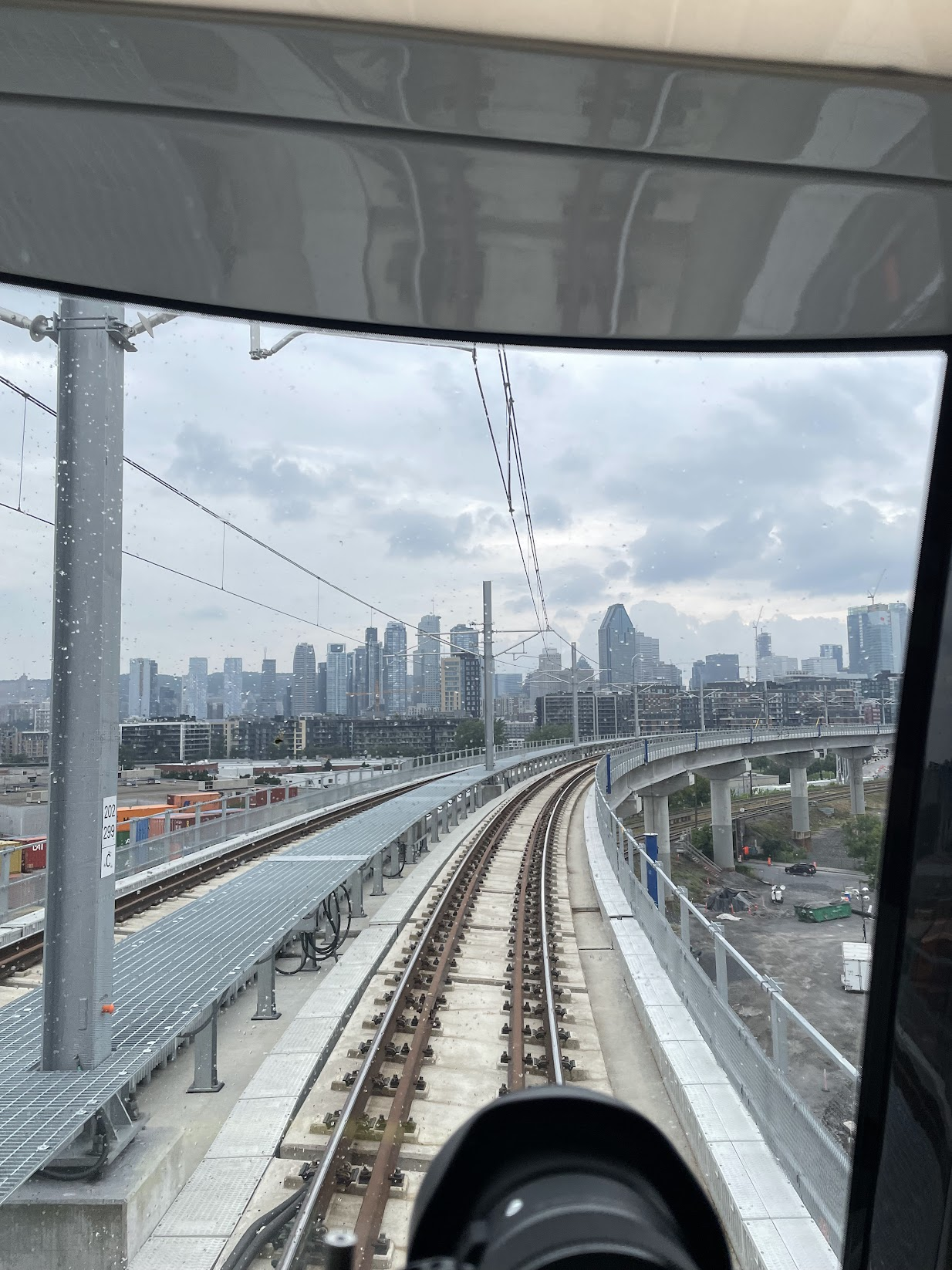
And the idea of setting national technical standards makes a lot of sense, and not just in Canada. From the Ontario Line, to the REM, to Sydney Metro and Melbourne’s suburban rail loop, similar projects with similar technical needs within a single country should adopt similar standards to increase the potential economies of scale that can be delivered in future maintenance and equipment orders. That would truly be a national approach to transit.

12 responses to “A National Approach to Transit”

  1. While a reasonable proposal especially around the federally regulated rails I think we have to be cognisant that the failure to control costs is often not an engineering problem but a political one. Montréal didn’t need to be told that elevated automated rail was going to be a more cost-effective tool then digging the whole way for REM de l’est, they knew if they had eyes to see but political pressures and the inertia of existing players kept them from seeing and so they chose otherwise. If anything I think it should be tied up with a version of the CIB, where federal funds are available to projects that adhere to a prescribed engineering design or prescribed financial metric ( cost / ppdpd ) where the Fed agency would be the one making the prescribed design and doing the financial analysis.

    If the city/province meets these requirements they get say, 20% from the Fed no questions asked with further funds left to the vagueries of politics.

    Without a tie-in to funding I think it would struggle to be more then an advisory interest group to projects that tend to be run at the provincial level with our provinces having an independent streak a mile wide.

    1. I don’t agree it’s simply political, there are a lot of places where engineering seems to be an issue. Even for the REM they seemed to do a kind of dubious job implementing obvious rail dampening measures on the south shore leg from the jump. I agree re. creating a system like this from the pov of federal funding though.

  2. If only we had a national approach to being a country! One could make the argument that it is the railway that brought this country together and that new regional and interregional transit could hold this ever factitious country together. Keep it up Reece!

    1. Thank you and you know what, it’s a good point. Providing this to each city would be a real value from Calgary to Montreal, and it would create a whole new set of professional connections too!

  3. I can imagine a new branch of Transport Canada being implemented that is a public transit procurement/planning and part funding agency. I can equally imagine Quebec wanting no part of such a thing, but would want the money for them to do it themselves. This from a Montrealer.

    1. I can imagine it, I would say go ahead, but be prepared to pay up when you want in down the road!

  4. Two political realities of Canada mak s this very sensible idea very unlikely. First anything inside Quèbec must NEVER be shown to be helped by English Canada.
    Second. The rest of the country HAAAATES Toronto. So even it makes s sense. They will cut off their er nose to ……

  5. In Melbourne Australia the public sector employs engineers on quite high salaries to oversee their rail projects. These people are drawn from the private sector and are on term employment. (In construction nearly everyone is on term employment.) The State Government has a long pipeline of rail projects including level crossing removals and the Suburban Rail Loop (SRL), so it’s worthwhile to employ such people in-house, whereas the alternative would be to employ consultants who would likely have a conflict of interest, such as potentially being part of a bid team. The level crossing and rail upgrade projects have been very well received politically, and have provided good value for money. A key to bringing costs down has been bundling several smaller projects with staggered delivery dates, so a construction consortium might be bidding for a 5-year pipeline of work. This way the bidder can afford to invest in specialist equipment and their staff gain experience from one level crossing removal to another, minimising the costs of project initiation and demobilisation.

  6. Funny that you talk about RATP, they just won the binding for the metro of Lyon (bus and tram still stay with Keolis [SNCF]). They are expending there expertise and gaining market in cities other than Paris.

  7. […] National transit expertise could help cities in Canada and the US with common problems like expanding capacity, electrifying trains, upgrading signaling, and rebuilding stations. […]

  8. John Charles Wilson Avatar
    John Charles Wilson

    I would support even making this transnational, throughout the English-speaking world at least. Many solutions that would work in the US and Canada would also work in Australia and New Zealand.

  9. I think you’re definitely on to something here. I just got back from Japan and while I was there, I learned of some of the truly amazing feats of engineering and labour they’ve pulled off. Almost every day I was in Tokyo I was riding the Toyoko line into Shibuya along a section of track that was somewhat recently rerouted from aboveground to below ground to enable through service to the Fukutoshin line, and the truly remarkable thing was that the final changeover was done in a single night *without interruption to revenue service the next morning*. And just north of there, at Shibuya, the Yamanote line platform was expanded several meters in a single weekend.

    These sorts of feat require incredible technical expertise and coordination that it’s difficult to conceive of transit agencies in North America ever pulling off. It’s not just consultants that get used here, either, but P3s, DBOM contracts, and the like, all of which squarely keep the engineering expertise out of the hands of the actual transit operators.

Leave a Reply

Trending

Discover more from Reece Martin

Subscribe now to keep reading and get access to the full archive.

Continue reading