

This article is the third part of a series of articles “Where will things be in a decade? Toronto’s Transit Engoodening“. Check out the previous parts in this series if you haven’t yet!
I’ve spent a lot of time talking about subway expansion, so I will keep this section brief. All in all, Toronto is building two major extensions off of the two main existing subway lines, and building two major new subway lines — following up the construction of the core of Line 5 Eglinton with a western extension to the Toronto border.
Eglinton
A lot of the strength of the Toronto subway system today is that the location of Line 2 at the north end of downtown manages to make it functional as both a pretty good crosstown and radial route — and if we are honest, its ridership at over half a million a day is among the TTC’s biggest achievements.
That being said, a crosstown line even further north in Toronto would obviously be very useful, not only for serving people on that busy crosstown corridor, but also for pulling people off of busy east-west buses, and helping people more easily get between the two “halves” of the rapid transit network.

The Eglinton Crosstown is therefore going to be a very useful line. Around Yonge and Eglinton East to Laird, it will be a subway serving rather dense (and further densifying) development, and further to the west it will serve as a much faster replacement to the Eglinton bus, while also serving the more modest redevelopment in this direction. It will also likely take some pressure off of Line 2 by diverting some trips around it.
On the western extension, Line 5 will act a lot like other suburban rapid transit lines in Toronto, being fed by well-used and frequent north-south bus routes. Better yet, like in the east, Line 5 can intercept riders from Line 2 on north-south buses, shortening trips and potentially encouraging new ones that would require too long of a north south journey today.
Ontario
The Ontario line will be the most important transit project Toronto builds since Line 1.
Not only will it create a new route into downtown Toronto, but it will also connect to GO in two places, and Line 5 in addition to Lines 1 and 2. The Ontario line will provide a backbone for super high-density development on the east and west of downtown Toronto — which is already appearing — while also letting people cross the core east-west much faster than they can today. The route will be like a keystone bringing together many projects and the TTC and GO rail networks.
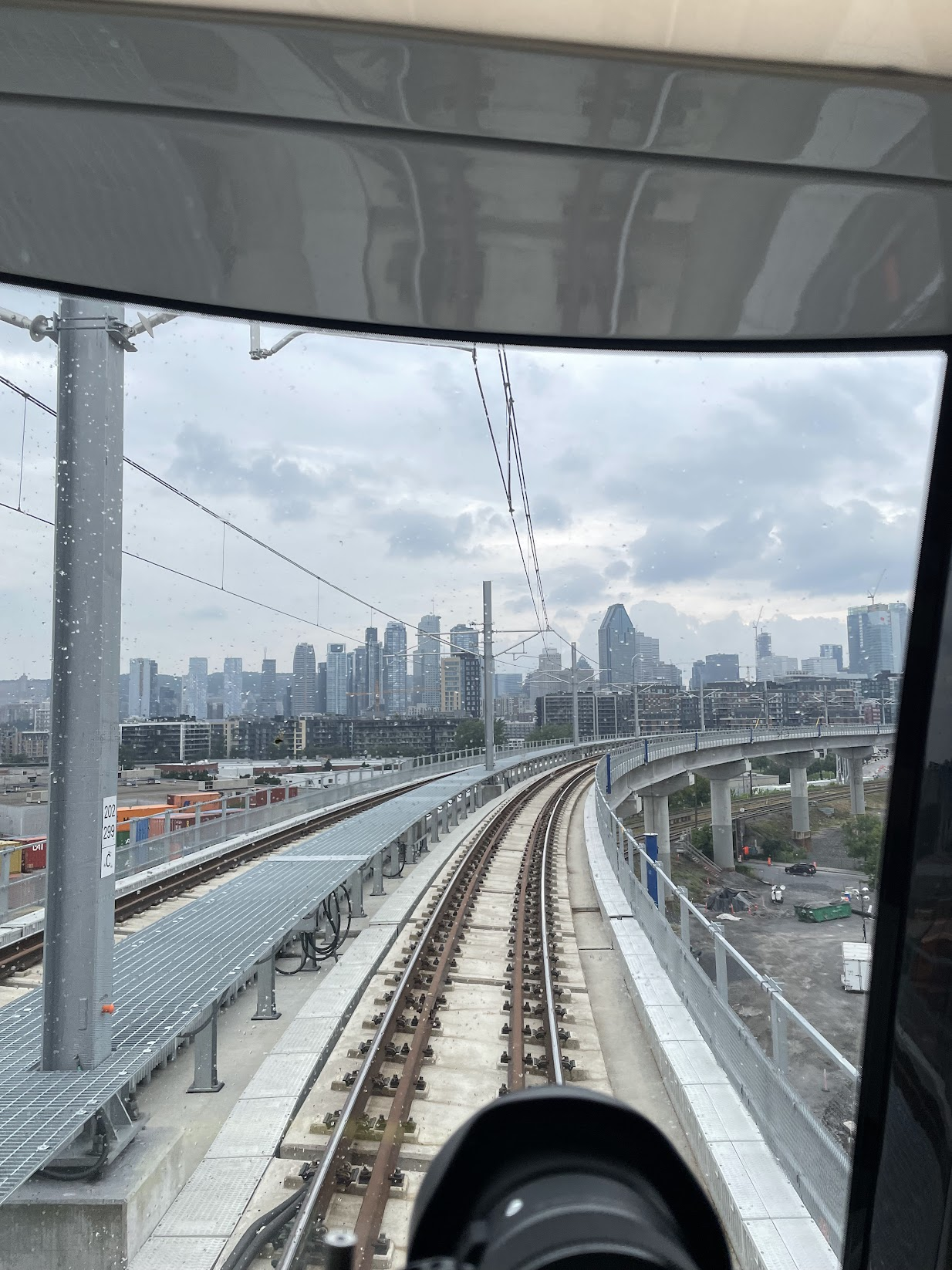
Better yet, the Ontario line will change how Torontonians and our politicians look at rapid transit — it will be elevated for much of its route, and it will be automated, meaning incredible views of the city for much of the route. It will also have platform screen doors and overhead line electrification — common technologies on subways internationally, but again firsts for the city. And finally, it will create a modern subway in the downtown core that doesn’t have the somewhat dirty and uncomfortable feeling of the going on century-old Yonge line, and which should also run much faster and more reliably. I think this speed and modernity will pull people who might have walked or taken the streetcar from brand new condos or on the way to swanky new offices back onto the subway.
Now, obviously, the Ontario line’s relief potential for the Yonge subway is widely highlighted — the line was originally known as the “relief line” after all. But I think what’s under-appreciated is how the Ontario and Eglinton lines together will form a basic “relief network” for the Toronto subway, creating a north-south line parallel and east of Line 1, and an east-west line parallel and north of Line 2. This will not only mean that during disruptions people have rapid transit alternatives instead of bus-only ones, but it should also change the TTC’s ability to do closures of Line 1 and 2’s core sections for maintenance and upgrades, as Line 3 and Line 5 can ramp up to provide diverted passengers good alternatives, including shuttling people between the two sides of Line 1 (say if, for example, the TTC wanted to close the Eglinton-to-Bloor section on either the Yonge or University lines). I think this is one of the little-appreciated things that will make the system feel much larger.
Scarborough
There are of course also the major subway extensions.
The Scarborough subway extension might not seem super exciting, but it’s going to be huge because it’s going to get the subway closer to so many people in north and east Scarborough, as well as key destinations like the University of Toronto Scarborough Campus and Centennial College. It will also bring the subway right to Scarborough Centre, a major hospital, and north Scarborough — where residents must endure very long bus rides to get to the rapid transit network. It will also be yet another link which will cross the 401 north-south, helping to stitch the city together across this major barrier.
Yonge
And then finally, there is the Yonge North extension, which will take the Yonge subway up to Richmond Hill, bringing both ends of Line 1 into York region and north of highway 407, and creating the third leg of the Toronto subway system to leave Toronto.
The Yonge North extension will take the Yonge subway — the most important line underneath the city’s (and the country’s) most important street — to over 20 kilometres long, and it will have many of the same benefits as the Line 2 extension, bringing subway and transit service closer to many more people. Based on York region’s modelling, it also seems that a lot of riders using the extension won’t even be going downtown, so the line will likely help boost places like Yonge and Eglinton and North York Centre. It will also see strong immediate ridership, because it essentially replaces many TTC buses that travel north from Finch station to travel on east-west routes, and VIVA and York Region services from further north.

The enhancement to VIVA also cannot be understated, because it will mean all three main VIVA corridors — Blue, Purple, and Orange — all converge on the terminal of Line 1. This should hopefully mean faster service, since more trips will be on the subway, but also because that brings the VIVA rapidways much closer to the subway. I would also hope that this will lead to York Region amping up connecting service.
The next topic to cover is the future trips that will be getting much easier with all this new transit — make sure to subscribe to have it delivered to your inbox as soon as it’s available!




Leave a Reply to Ron HuybrechtsCancel reply