
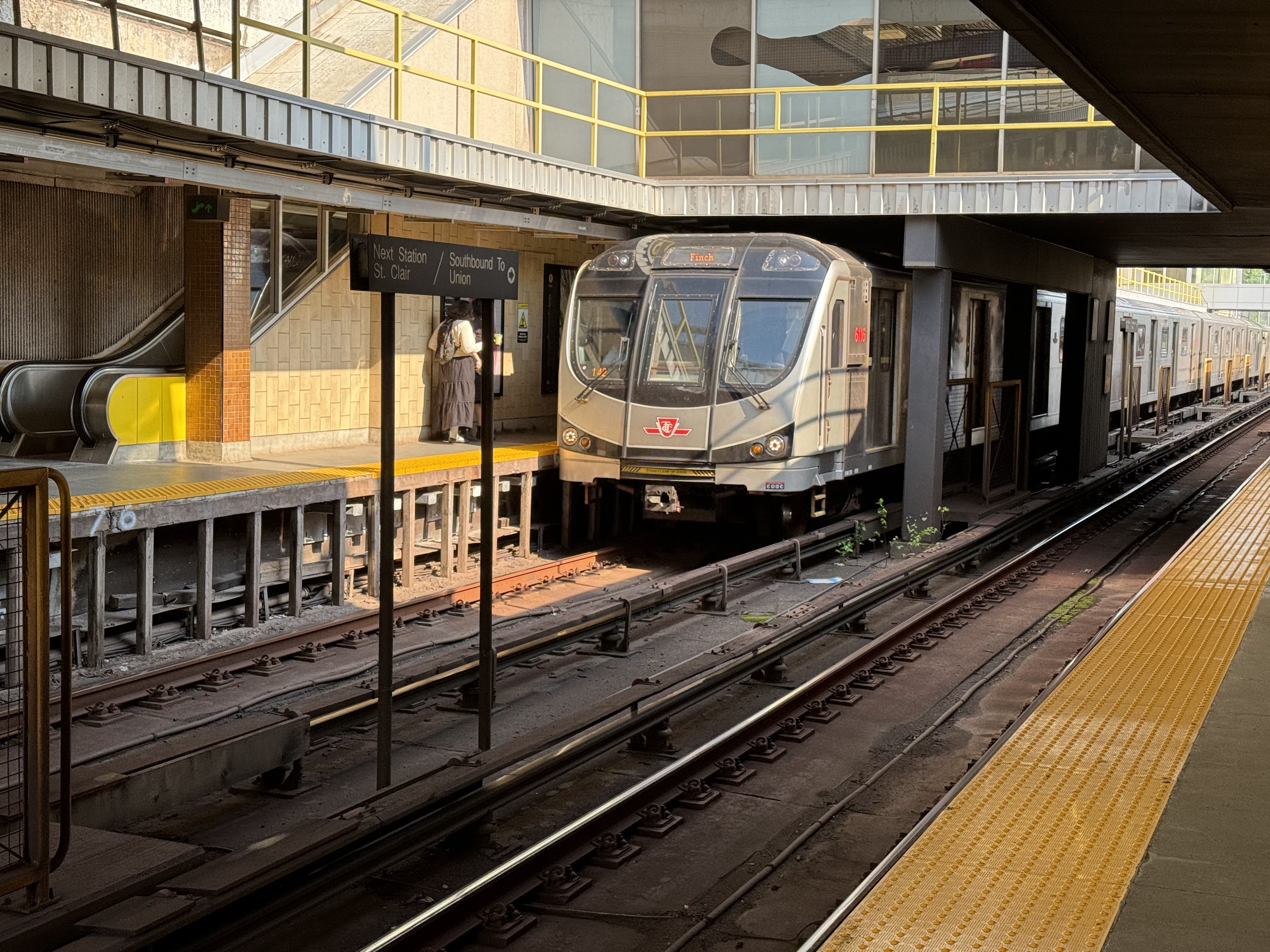
This article is the fourth part of a series of articles “Where will things be in a decade? Toronto’s Transit Engoodening“. Check out the previous parts in this series if you haven’t yet!
Now, the question that I think is interesting is what trips get easier as a result of all of this new transit. And when I say easier I of course mean faster, but also more regular and comfortable, because those things do also matter.

The most obvious thing is that getting around Toronto will be much better, because a large part of many more trips will be able to be made on rail. This might actually change a lot of local transit demand as people have new shorter routes that get them to rapid transit. Of course, the same trip taken on rail that was previously rail-plus-bus will be much more comfortable and reliable too, so I expect more ridership reach and intensity, as making trips gets much more comfortable.
At the margin, a lot of key destinations on the edges of Toronto, as well as at the edges of Toronto’s core are going to become a lot more accessible. Places that are rail-plus-walk today will become all rail, rail-plus-bus might become rail-plus-bike or rail-plus-walk, and many bus journeys will get shorter. Downtown locations that were a decent walk from the subway will get much closer, and several locations will suddenly become major interchanges. The speed of trips and their consistency will also improve a lot, making a lot more trips a blowout for transit versus the car.
Secondary centres like Hamilton, Brampton and Mississauga will also see commutes become easier, as rail improves transit options, but they might also become places people are comfortable to commute and take day trips to, as frequent GO services are met with convenient local rail links. In general, I think trips outside of the urban core of the region will get a lot easier. You could take the Scarborough subway to the Meadoway and bike to Morningside and Rouge parks, or take Line 5 to the Eglinton Flats and Humber Valley parks, or take GO to Kitchener and Barrie — “outdoors” trips will become so much more doable on transit.
It will also have a huge impact on commutes and journeys into downtown Toronto, which by extension will be able to grow even faster as more people can access the core in a timely matter. It’s likely that many people are able to shuffle, meaning bus commutes become subway commutes, and some car commutes become new rail-and-bus commutes. All meaning far more people from far more places can get downtown easily.
The next topic of this series is where we’re going next — make sure to subscribe to have it delivered to your inbox as soon as it’s available!






Leave a Reply to johndw15Cancel reply