
Hey everyone, and welcome to this week’s off-topic post! Regular reminder that some Sundays I release an extra blog post where I talk about something that isn’t city or transit related.
I need to preface this article by saying the conclusion right up front — don’t be an early adopter.
I’ve been talking a lot about how my goals for the year involve improving my finances, and this is one big way people could go about doing that generally! In this article, I’m going to use the example of electric cars and the Apple Vision Pro, but there are all kinds of much less expensive examples where just having a little patience to wait for version 2 or 3 could save people a ton of money and land them something that is much more valuable and long lasting.

These days, especially if you love technology, there are a lot of exciting things happening. Even if you are pretty skeptical of Apple, the Vision Pro is a pretty technically impressive device for which there is no analog from another company. In many ways, it appears to be one of the most immersive and personal consumer devices ever created.
Now, just scrolling Twitter I’ve seen every possible reaction to this device — from frankly reprehensible behaviour using it behind the wheel of a car (or triangle truck), to people walking around with it on in public, to people who generally try to appeal to the rational side in people’s mind suggesting they approach people and violently remove the device from their head.
While I won’t be running out to get a Vision Pro — in fact, it’s not even available in outside of the US — I must say I’m already quite excited about the technology. I’m generally a believer that all technologies come with goods and bads, and while some might claim that a headset you wear on your head is somehow uniquely invasive or dangerous in most cases it doesn’t really seem all that much different to a mobile phone to me. For me, what’s really exciting is the potential uses of high-quality augmented reality, I can only imagine how incredible transit wayfinding could be if systems were designed to provide turn-by-turn indoor navigation right in your field of view, or if the current station you’re arriving at could be presented off to the side of something you’re looking at. I could probably write several entire articles on all the interesting potential applications of excellent augmented reality, but that’s not really the point of this article.

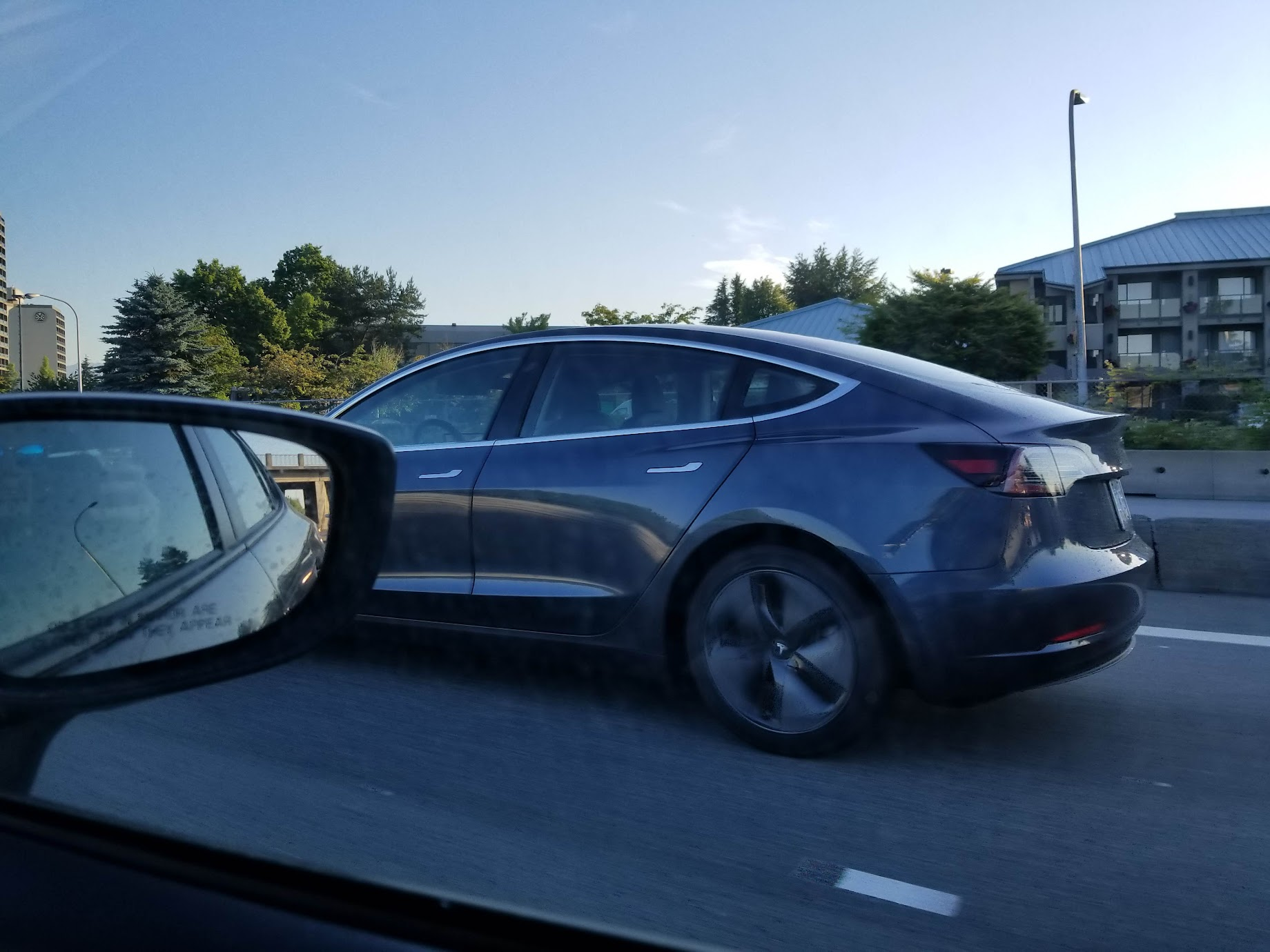
EVs are another technology that comes to mind. My opinion on electric vehicles really hasn’t changed over the years — I’m not a car guy, but I’d much rather anyone who is driving a vehicle drive one that is electric and doesn’t subject me to all kinds of toxic gases and immensely irritating noise. I’ve personally spent about the same amount of time on public transit in the last week as I have behind the wheel of a car in the last 5 years, but I recognize that especially with the challenges we face building public transport, EVs are going to play a pretty important role on lowering our CO2 emissions in the short to medium term.
It’s at this point that I have to say I’m pretty disappointed with the way a lot of people in the urbanism community (and the media in places like Canada) talk about electric vehicles. Sure, these vehicles might be marginally bad for the urbanism cause, but after all most people interested in this stuff already know that cars themselves are usually the problem.
So often the discourse is just illogical or non-factual. For one, I see a lot of discussion about how EVs aren’t worth considering until the grid is 100% zero emissions (something I really wish I stopped hearing 5 years ago). The beauty of electric vehicles is that they can keep operating in the exact same way as the grid transitions to zero emissions electricity, and even running on fossil fuels they’re far better for the environment because they’re just so much more efficient than internal combustion cars. It has also been important to me that efforts to highlight that EVs are not a solution for all our problems do not undermine what is clearly a better technology for everyone even if we still had just as many cars as today (which seems unlikely).
There are so many technologies that are very exciting but still very much in their early days in 2024. And as someone who’s followed technology for a long time, I need to implore people to show some restraint.
But this is the point where I remind you, that the Apple Vision Pro and basically every electric car is a luxury product. On the electric car front, nothing frustrates me more than the fact that the government in Canada continues to subsidize their purchase. Of course I want more EVs, but more often than not, in the last 5 years there have been more orders for these cars than actual cars that get delivered — there is no shortage of demand for electric cars so we shouldn’t be subsidizing what is a luxury product. I think the government should focus on investing in grid and charging infrastructure, which will make electric cars a more attractive option, gives the government some infrastructure assets, and still be useful even as we reduce the number of cars on the road (think fleets and things like work vehicles). Better yet, charging infrastructure should more or less stay relevant over time, because electric cars no matter what the battery chemistry or design are always going to need a way to plug in.
The common thread I see between the Vision Pro and electric cars is that both are clearly pretty early on the technological development curve. While electric vehicles have been around in a pretty serious way for around a decade, there are still a bunch of really obvious problems that haven’t been solved: range isn’t quite where it probably should be (especially in cold climates), charging speeds aren’t quite as fast as I think people will come to want (there are a lot of 15-80% charges that take 30 minutes but should probably take 15), and the charging networks — especially in North America — are a bit hilarious. There are concepts like plug and charge where you don’t need to deal with apps or RFID cards and you can simply plug an electric vehicle in and it will charge and bill you automatically, but this is limited to certain combinations of charger and model.

I think the reality is that by the time a lot of these basic problems get solved, most EVs hitting the road today will be middle-aged, and this is really what I’m talking about when I say the early adopter tax. Generally technologies do need people to adopt them and show that there is a market, but you’re definitely not getting an amazing value if you get something like an electric vehicle today. For my family members that live far from any major city and have to drive around, I used to really recommend that they go for an electric vehicle if they were interested in a new car, but today I think I’d just tell them to hold on to their existing car. You see, 5 years ago I was kind of worried that electric vehicles might not properly take off, but I think that concern can be put to rest: even in some Canadian provinces, over 20% of new vehicles are electric, and many car manufacturers have basically stopped developing new gasoline cars. Of course, it’s always best to use something that exists rather than purchase something anew (and manufacture it in the first place), but I can’t help but feel that early adopters of electric vehicles are really getting hammered.
Just speaking of the charging situation as I was earlier, it’s basically been announced by every major automaker in North America that they will be switching to using the same port for charging their vehicles as Tesla (called NACS). And since this won’t be happening for at least a year or so, every electric vehicle purchased in the last 15 years is going to be suddenly much more annoying to use (at least if you don’t have a home to charge at) because you’re going to need to deal with all kinds of adapters and the like for the many many chargers that are likely to come online in the next couple of years.
And I feel similar things about the Vision Pro after watching many reviews of it over the last week or so. It’s cool technology, but you just know it’s going to be obsolete after a couple of years, as is usually the case in any new technology category. There are just so many holes in the design that can obviously be fixed. Even just waiting a couple of generations before you go and get something like this is probably going to mean way better battery life, a less uncomfortable product, and a processor that actually makes sense in this type of device.
And what do most electric cars and the Vision Pro have in common? An absolutely ludicrous price tag. On the electric car front you’re basically always getting less for your money just for the privilege of the car having technology that will pretty clearly be out of date within a year or two.
Avoiding purchasing products like these which aren’t always quite as expensive and out of reach to regular folk (think a first generation game console) is a great way to not be taxed by corporations so they can develop a reasonable mass market version of the same thing that almost certainly performs better and costs less. The Vision Pro is one of the most interesting examples of this I can think of, because Apple almost isn’t hiding that it’s selling a luxury product for early adopting guinea pigs — it has Pro in the name, which is Apple’s way of denoting a high-end product, and it’s made largely from metal and glass, which might make the product seem more impressive in pictures and at a store (good for sales) but make for an uncomfortably heavy device in reality (bad for users), and even Apple’s native apps haven’t all been optimized for it yet!
I can think of no better example of this problem than the iPad. The first generation iPad was kind of chunky, didn’t have a camera, didn’t have a great screen, had a silly connector, and didn’t have real stylus or keyboard support. 5 years later, you have a product which cost about the same, but had addressed basically every problem I just listed, and was faster and almost as good as the next several iterations of the product to come after it.
To summarize the issues I see with being an early adopter:
1) The next version is sure to be substantially better, so waiting has a big payoff.
2) The pricing virtually always is set high so you can cover product development costs, so you’re by definition not personally getting a lot of the benefit. Future models are almost always a better value.
3) Changing standards mean you might be stranded with a dead end technology. Or at the very least something which is always going to be at an irritating disadvantage to the cutting edge.
4) Early products seem much more likely to create waste and be bad for the environment; since designs tend to change more rapidly for a new technology, support tends to also last for a shorter period. Since performance is also not typically very good, the product is not functional for as long.
5) Further along the technological development curve when innovation slows (this obviously takes longer for complex technologies that require Network effects like electric cars) improvements on each iteration slow down significantly, allowing units to last much longer.
6) When products become more mature, concerns that are unfortunately seen as secondary (like the environment and ethical manufacturing) get more attention. Look at how long it took between the first smartphone and the Fairphone for example!
If you’re wondering why I wrote this article, the main reason is because I’m kind of always sad about the relentless consumerism in our world. I get that having a new phone or, if you must, a new car is nice, but most of the time people probably don’t need it, and every extra time people think to themselves “do I really need this” is some CO2 we don’t emit, and some money people could spend on doing something that would make them feel happy — like getting on a train or bus!





Leave a Reply to Reece MartinCancel reply