
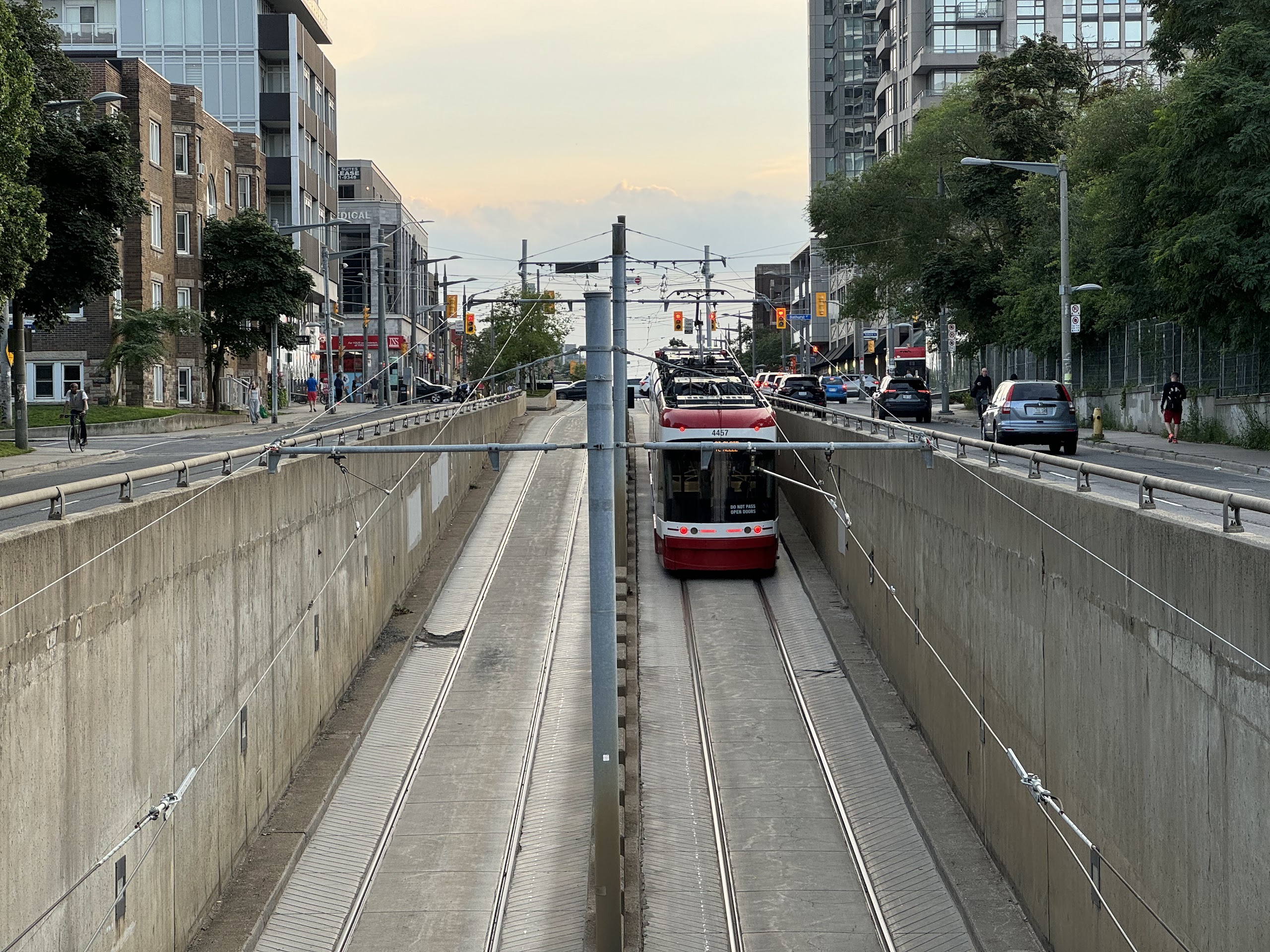
The Toronto streetcar system has long been held up as a symbol of the city’s progressive and forward-looking attitude towards transportation, even while simultaneously the one thing all Torontonians seem to agree on is that the streetcars are unfailingly painfully slow.

But as the city and congestion grow, and alternatives become more and more available, the shocking status quo (that is, a mode of transportation so frequently seen as a symbol of the city has become so completely dysfunctional) threatens to bring us back to an era where serious doubt is cast on the future of the streetcars. (If you’re curious, I think the streetcar preservation and symbolism as a reaction to those once pushing their removal, and the disdain for them politicians like Rob Ford have had, has unfortunately blinded many to their real and obvious flaws.)
If you enjoy my content, consider subscribing to my blog:
or supporting me on Patreon:
Your support will help me bring you more content faster!
Not once but twice in the last week while talking to transit-urbanist types, I’ve been reminded how bad things are for the streetcars.
I frequently talk about the frustration of their low speeds, dated infrastructure and operations, and lack of reliability, but I’m used to people saying “it would be fine if they just had their own lanes in more places!”. To be clear, more dedicated lanes would be nice — but suggesting that they are a panacea betray a lack of serious thought about the network. The 510 Spadina route has dedicated lanes and is painfully slow and inconsistent. It’s actually typically in “outer” areas — old suburbs — where I find the streetcars work best, where traffic is light, road space is copious, and stops feel slightly less plentiful.
But, what did my conversations reveal?
Well, one person just flat out mention they don’t ride the streetcars these days: Too slow, they said, and cycling is easier (something I’m hearing more and more, and which will only become more common as the cycling network rapidly expands). The other person had comments with more of a city building spin: If we can’t remove street parking or drop-off zones, and we want more bike lanes, and we aren’t willing to rethink how our streetcars interact with the streets, maybe they should just go.
Indeed, if you think the streetcars are universally loved, a lot of people who do love public transport and this city seem to be over them!

Meanwhile, I hear other people saying that if they want to get somewhere downtown that isn’t on the subway, they’ll often just Uber; it’s surely faster than the streetcar, and with friends the cost is not much higher — I don’t regularly use Uber or Lyft myself, but this makes sense to me and is concerning.
This post isn’t meant to be about the various problems with the streetcar network (I’ve talked about this lots before), but something I’ve been thinking a lot about is what Toronto might look like without the streetcars.
The sad thing is, I think there’s a good chance it would be better.
The issue here is that with the status quo of the bad streetcar network, so many problems are festering and going unfixed, from infrastructure to operations — and I’ve talked a lot about how we need a big ambitious plan to come in and fix a lot of these things at once, but there appears to be no will for one.
Meanwhile, I think (as a thought experiment, obviously) the winding down of the streetcar would probably be enough of an event to shake us out of our complete inaction. Even under a progressive city hall, projects like the King Street priority corridor have gotten minor attention at most. New routes could be designed, better stops could be implemented, stop spacing could be rationalized due to the different performance characteristics of buses, and service levels could be boosted. Already, when buses replace streetcars during increasingly common shutdowns, a contingent of people say the experience is better, and since nobody with the power to do so seems interested in seriously improving the streetcars, maybe the need to create a new downtown transit service would startle them awake.
Now, there is the obvious response “we would need three times more buses!” and maybe we would, but I doubt it — at least not to match the level of service currently being provided on the streetcar network, which sees many cars out of service on any given day. We might need three times more buses to replace a streetcar network in its ideal form, but that’s not what we have. Of course in any case, we should plan transit for a high level of service, but we seem to forget that that’s not something the streetcar network consistently has today — and as a result it has lost many riders to cycling, driving, and probably even walking.
What hasn’t been helping is the unending streetcar route closures and reroutings, some of which feel like they happen just months after other related closures in a completely uncoordinated mess. When I got on board the St. Clair streetcar recently after months of being closed, I realized that now the bus and streetcar loop at St Clair West station has been closed, making a key connection on the route much less convenient. Could this work have been done at the same time as the rest of the line being shutdown? I don’t see why not, and I can’t imagine most people feel this inspires confidence in their mode of transportation.

And these shutdowns frequently seem to come out of nowhere. No doubt they are communicated in advance, but you won’t hear announcements on the transit system, and so it can be easy to miss.
But even considering that, the execution of the closures leaves so much to be desired. The replacement for the Spadina streetcar — a mixed traffic bus without even temporary bus lanes (despite the drawn out nature of the closure) — has been a real mess, particularly getting stuck in traffic near the Gardiner (temporary bus lanes may well be coming, but it really feels like a classic too little too late). And of course, none of this would be a problem if the streetcar right-of-way was designed to enable use by replacement buses (this is something I wish we didn’t have to do, but Toronto seems unable to consistently keep key streetcar routes open).

I think it’s clear that the streetcars are facing an existential crisis, because at the moment they do not have a strong raison d’etre. 10 years ago, the streetcars were slightly less slow, slightly more reliable, and the alternatives were less well established; these days, it’s becoming less clear who the streetcars are actually for.
I think for this reason it’s absolutely critical that a streetcar “rethink” is pursued as soon as possible. I see this as so important, because I think the Ontario line (which will provide a much faster more frequent and all around better alternative for many destinations and trips that are currently usually accessed/made with streetcars) could be the straw that breaks the camel’s back for the network as I’ve discussed previously.





Leave a Reply to rogersexton140Cancel reply